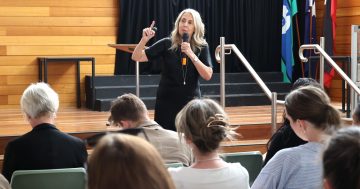


The shoes are shined and uniforms pressed – now we need to work out how the hell to navigate school hours with work hours. Photo: Claire Fenwicke.
Who remembers the panic from businesses, bosses and politicians about how productive we wouldn’t be when the country had to shut down due to the COVID-19 pandemic?
Workers weren’t going to be meeting deadlines or delivering “deliverables”. Instead they’d be baking sourdough while occasionally shaking their laptop mouse to look like they were online.
That might have been happening, but a hell of a lot of work also got done. Fast forward to 2026 and working from home is now part of the vernacular, with many people reporting better work-life balances and productivity than when they were distracted by chatting colleagues in their open plan offices.
But while office-based businesses have (mostly) understood that work is no longer a place to go but something to do, other sectors seem to have missed the memo.
Schools, I’m looking at you.
A 2025 article from CQUniversity put it succinctly: our traditional school day (typically from 8:30 am to 3:15 pm) was designed for another era and no longer reflects the realities of modern life or workforce demands.
“Our education system was built around industrial-age routines, not human ones,” university Educational Neuroscience head Professor Ken Purnell said.
“It’s time to reimagine schooling so that it works with people’s rhythms, not against them.”
Staggered-start trials have been run in Sydney and pilot programs are under way in Queensland. Prof Purnell argued changing things up with flexible models and split-shift timetables would be beneficial for parents and teachers.
Plus it made economic sense by optimising classroom use and reducing the need for new infrastructure.
“When classrooms and technology are used more effectively, everyone wins: teachers, students and the community,” Prof Purnell said.
“Cultural inertia, outdated policies and fears about equity are holding schools back. But we’ve seen through the pandemic and numerous trials that flexibility, when designed well, strengthens education – it doesn’t weaken it.
“What’s needed now is the courage and leadership to make flexibility a standard feature of Australian schooling.”
Hear hear.
It would also mean parents wouldn’t have to face the exorbitant costs of before and after school care.
I have two children leaving daycare and heading to school this year. My husband and I were looking forward to saving some serious coin but it looks like out-of-hours school care is going to cost us just as much, if not more. And for the uninitiated, childcare costs about the same as a mortgage, even with the subsidies.
Flexible models and split-shift timetables could also mean children and teachers aren’t staring down the barrel of 11-hour days so that both parents/carers/etc can do their jobs before pick up.
That’s the unfortunate reality for many children in childcare – the educators benefit from split-shifts so they’re not doing the same.
With AI topping LinkedIn’s list of fastest-growing job opportunities in the country, maybe businesses also need to take another hard look at how it’s providing flexibility so that kids aren’t at daycare from sunrise to sunset.
I vote for more annual leave opportunities so that people aren’t having to take unpaid leave to look after their children during the school holidays (not all of us are able to lean on family).
And before you come at me, the same opportunities should be made available to people without children as well.
But please don’t tell me you’re using the time for your “fur babies” (it’s not the bloody same).