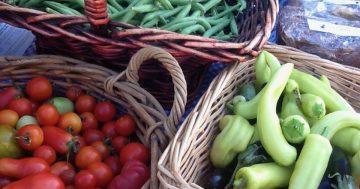

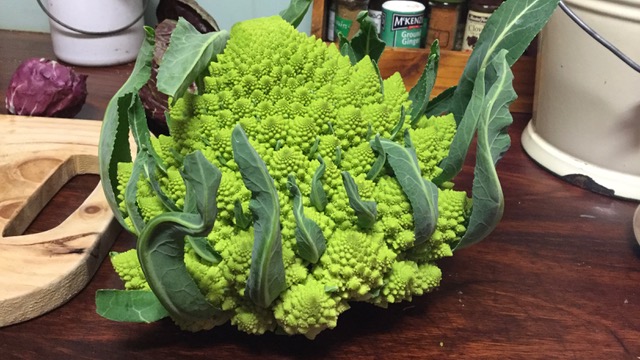
A pretty romanesque cauliflower. Photos: Wynlen House.
It’s been a warm, dry summer in Canberra, which is great for all those wonderful summer vegetables. Tomatoes, eggplants, corn, beans, peppers and chilli should all be bearing fruit and ripening well, as long as you have been able to keep the water up to them.
Of course, insect pests seem to be enjoying the heatwave and low-rain conditions as well. The passion vine hopper (and its nymphs) and the potato beetle are back, as are white fly and aphids.
Finely applied derris dust works well to kill potato beetles, while a combination of neem oil and horticultural soaps is effective for the passion vine hopper, aphids and white fly. The passion vine hopper and its offspring are particularly annoying because they are so quick. They can outfly or outhop attempts to spray, so one has to be persistent and approach affected areas with stealth!
A significant infestation of passion vine hopper and potato flea beetle will need more than one natural pesticide application. The passion vine hopper particularly likes passion fruit vines, so keep a watch on these!
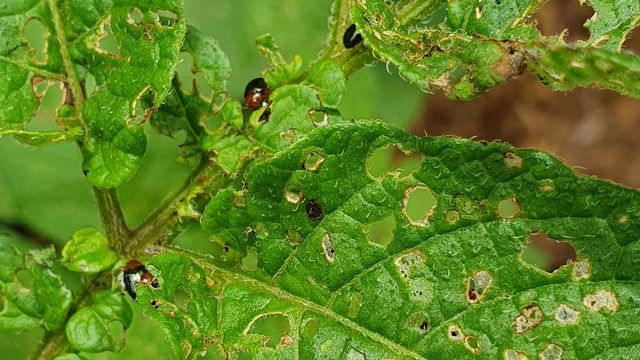
The destructive potato beetle strikes again this summer.
Members of the brassica family are among the hardiest of any vegetable group, in hot or cold weather. Broccoli, followed by cauliflower, are the hardiest of them all, even though cauli can be damaged by blazing sunlight and heat (and frost) when the heads are maturing.
Cauliflower is a major Australian crop. We grow about 85,000 tons a year (not counting what we backyard farmers produce) and there is constant work by the industry to evolve the vegetable to suit supermarkets, consumer preferences and changing climate conditions.
As an example, there are now many coloured varieties coming to retail nurseries as seedlings. They are fun to grow (they brighten up the veggie patch with lots of colour) and they are delightful to eat. Romanesco is one such variety, with a striking twisting shape, green curds and sharper cauli flavour. Macerata Green is another coloured variety, as is Purple Sicily, and Di Sicilia Violetto is a luscious dark purple. Snowball is the one to get if you like a nice, stark-white cauliflower.
Cauli can be planted directly as seed now, especially if you can’t get the varieties you want as seedlings. As for whiter-than-white varieties, there are innovations currently entering the industry to give us super-white caulis: of particular interest are varieties that grow leaves that wrap around the developing head, protecting them from the sunlight.
This could also be a very useful trait for those of us growing in frosty climates, as the leaves will also protect the cauliflower head from the frost. As with most new varieties, it will be some time before they are available to home growers. In the meantime, the old practice of tying the cauliflower leaves over the head to provide sun and frost protection is just as good.
When it comes to growing cauliflowers, there are a few steps to take in soil preparation and nurturing your crop for the best chance of success. First, friable soil, such as a well-drained clay loam, rich in compost and with added well-rotted animal manure, will work well to support the plant. A pH of 6.5 to 7 is needed to discourage disease.
Cauliflower loves an additional spreading of lime to support growth, and calcium plus boron to reduce root disease, so along with well-composted animal manure, compost and a complete pelleted fertiliser, add some lime dolomite mix, a ½ cup per square metre, which won’t alter the soil pH, and check that the complete fertiliser you are using includes boron. If not, the easiest way to add boron is to use Borax (pure boron), generally used for cleaning and often found in the laundry aisle of supermarkets. It is a micronutrient, so only a very small amount is required (½ tsp per sqm.)
Caulis, like all brassicas, need six to eight hours of direct sunlight a day. A sunny spot with either some morning or afternoon shade will be fine. Since this veggie likes a lot of nutrients, top up with a complete fertiliser every few weeks, perhaps with a seaweed-based liquid fertiliser. They like deep watering, so drip-line irrigation, under mulch in the hot weather, will keep leaves and growing heads tender.
Like most big brassicas, they have a few significant enemies: caterpillars, from both the white cabbage butterfly and the brown cabbage moth; and aphids. Downy mildew and various rots are also common, particularly in prolonged wet weather. Regular sprays of neem oil and/or horticultural soap will keep insects under control. Good nutrition and good air circulation will help with the rest.
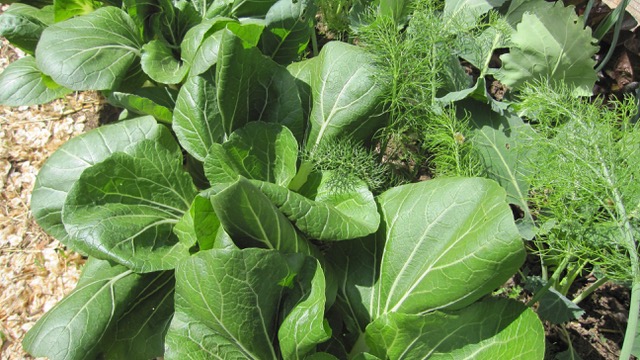
Magnificently mature choy joi.
The one thing to remember about cauliflowers is that they can take a long time to grow, anywhere between 12 and 16 weeks, and in colder climates up to 24 weeks. This is particularly the case with some of the coloured varieties. So don’t be impatient. Head formation does not occur until the end of the growing cycle, anywhere between two and four weeks before harvest.
Late summer means what you start planting now will be for late-autumn or winter eating. Lots of vegetables can be planted now as seedlings. Asian greens, particularly the larger plants such as choy joi, Asian cabbage or wombok, can also be eaten a leaf at a time. Beetroots planted now as seedlings will be ready to start eating in six to eight weeks. Leave them longer to grow larger for pickling.
Kohlrabi and kale are well planted now as they will be maturing in cooler late-autumn weather. Celery, bulbing fennel, lettuce, endive and radicchio can be planted as seedlings in February. Leeks are perfect for planting now, to make sure you have access to fresh onion flavours over the colder months.
Peas, rocket, turnip, carrot, Asian greens, radish, parsnips, pickling or pearl onions, cress and corn salad can all be planted as seed now too. A busy planting month is ahead.