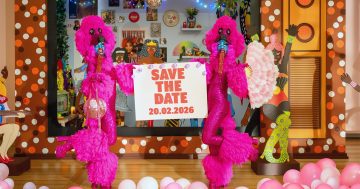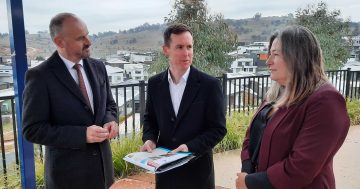


Sports Minister Anika Wells (centre) has drawn fire for her use of taxpayer money. Photo: Instagram.
Democracy rarely collapses in a single dramatic moment. It happens slowly over many years, through secrecy, double standards and the steady normalising of behaviour that convinces people the system is no longer worthy of their trust.
The current focus on family reunions for politicians is interesting, given the majority of MPs and Senators haven’t abused the system. So it’s good to see some names being called out.
Politicians spend so much time away from home (except for our lucky Canberra-based five) that they deserve that type of support. Just put a cap on the travel – say $5k for a partner and for each child. And given we live in modern times there would have to be a cap of three partners per year.
Because once people start asking “why should I pay tax if they’re just going to use it to pay for family trips to Uluru?”, the foundations of democracy will be at risk.
Tax is as much a social contract as it is a revenue tool. Societies function because the great majority of people contribute their share for funding of hospitals, aged care, defence, emergency services, roads, disability support and education.
These things don’t just happen, they exist because people and businesses in Australia, by and large, do the right thing quietly and consistently.
But that willingness can be fragile. When political leaders behave badly, hide information, or treat public resources like their own, they don’t just create damning headlines, they create an environment in which ordinary people start to copy the behaviour they see at the top.
Having participated in advisory panels to the Australian governments, to Treasury and the ATO on the cash economy since 2008, I can say with certainty – tax compliance is as much cultural as regulatory. And culture is shaped by many things – for example our sports stars and industry leaders – but the greatest example is set by those in power.
This was reinforced for me back in the 1990s while consulting on micro-economic reform in developing economies.
When leaving one country, a border guard began referring to items in my luggage as “treasures”. They weren’t treasures (one was a deck of Singapore Airlines playing cards) but it was clear he wanted money. I called it a “departure tax”, hoping to not end up in a Midnight Express scenario. The other guards watched with interest to see how much he might extract which they would all obviously share.
It wasn’t greed. These guards were paid so little that informal “tax” collection had become a normal supplement to their income. And why was that? Because ordinary citizens didn’t trust government enough to pay tax. Political corruption was the cause of the failed tax base.
Australia is worlds away from that scenario, but the underlying principle is the same. When trust erodes, community behaviour erodes with it.
We always see the early signs: “can I get less for cash?”, “it’s an Airbnb not a holiday house, so I can claim expenses (yeah sure)”.
That is when we nip it in the bud, if only some politicians would help set an example.
My bailiwick, small businesses, is particularly sensitive to this. They rely on firm legal frameworks, clear procurement processes, transparent government decisions. When governments hide reports, weaken Freedom of Information access or appear to grant favours to mates or donors, small businesses notice.
When some ministers fly their families all over the country at taxpayers’ expense, then we all notice.
And every observation chips away at trust in institutions, trust in fairness and ultimately trust in the idea that paying your share is worthwhile.
One story that shows how dodging tax can be seen as fair and normal involves an electrician who famously offered “10 per cent off for cash” to an ATO officer while quoting on emergency storm repairs. He wasn’t joking. He thought he was being fair, as “I offer everyone the same discount”.
When people see political leaders behaving as though public money is theirs, they just might start to think “if they don’t treat public money seriously, why should I?”.
And the consequences are real. When fewer people pay tax, governments cut corners. When governments cut corners, institutions weaken. When institutions weaken, corruption often leaks in.
The good news is that Australia is nowhere near this outcome. Our tax compliance rates are among the highest in the world. But continuing good systems depend on cultural reinforcement, not complacency.
Because every time someone asks for or offers “less for cash”, the cost isn’t the missing GST. The cost is the quiet erosion of a shared belief that we’re all in this together.
And once that belief goes, the rest follows. Most politicians do set a good example … it’s the others we have to watch.