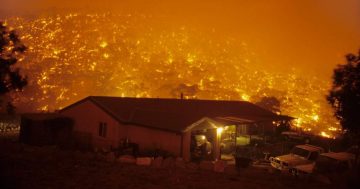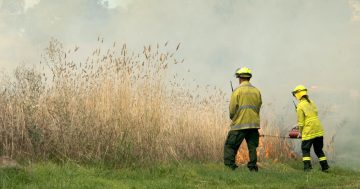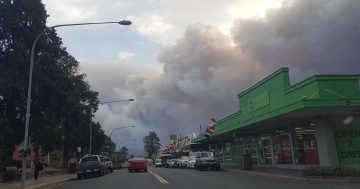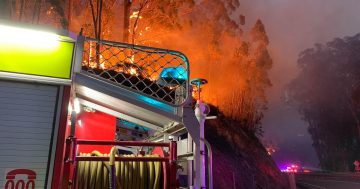

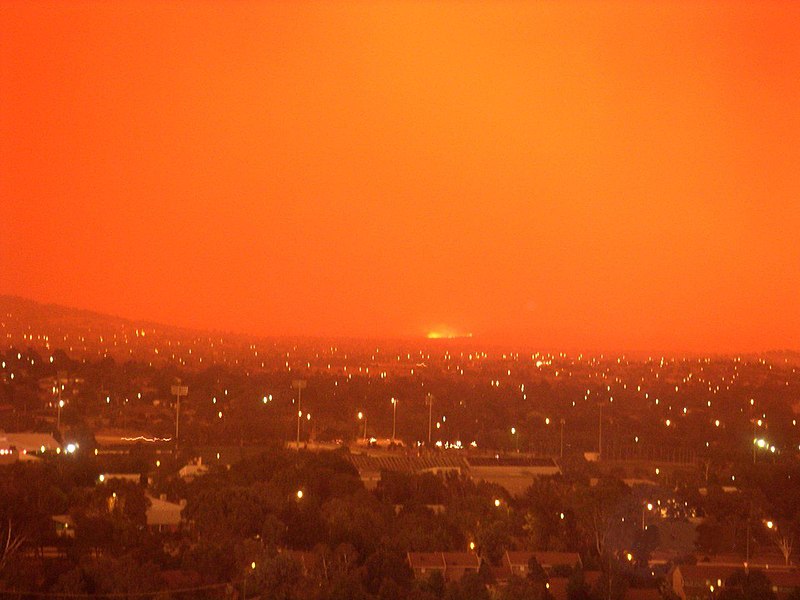
January 2003 … it’s only a matter of time before Canberra faces a similar fire threat. Photo: File.
The status of the ACT Emergency Services Agency needs to be reviewed and money poured into firefighting resources and managing Canberra’s urban fringe to prevent catastrophic bushfires again breaking into the suburbs, a former ACT ESA chief says.
The warning from Major General Peter Dunn (retired) comes on the release of a new report that views a growing Canberra as a prime candidate for a Los Angeles-style fire to explode across its urban fringe and surpass the 2003 bushfire disaster that killed four people and destroyed nearly 500 homes.
The report from the Climate Council and Emergency Leaders for Climate Action, When Cities Burn: Could the LA Fires happen here?, says a combination of global warming, unpredictable weather conditions and expanding city limits was shortening the odds that a similar disaster in the suburbs could happen again in Canberra and other major Australian cities.
Its analysis shows that the outskirts of Canberra, Sydney, Melbourne, Adelaide, Perth and Hobart share characteristics that made the January 2025 LA fires so destructive.
“Just like in LA, more people than ever are living in harm’s way on the fast-growing urban fringes of Australian cities,” the report says.
It says Canberra is particularly vulnerable to this scenario, being ringed by nature reserves and having grown markedly since the 2003 disaster, with suburbs and homes backing directly on to forest and grassland.
The report notes that there are now 332,760 people living in outer suburban areas, up 46 per cent since 2001.
It points to the ACT’s northern and western edges, from which the 2003 firestorm raged into the western suburbs, where there has been greenfield suburban development over the past two decades.
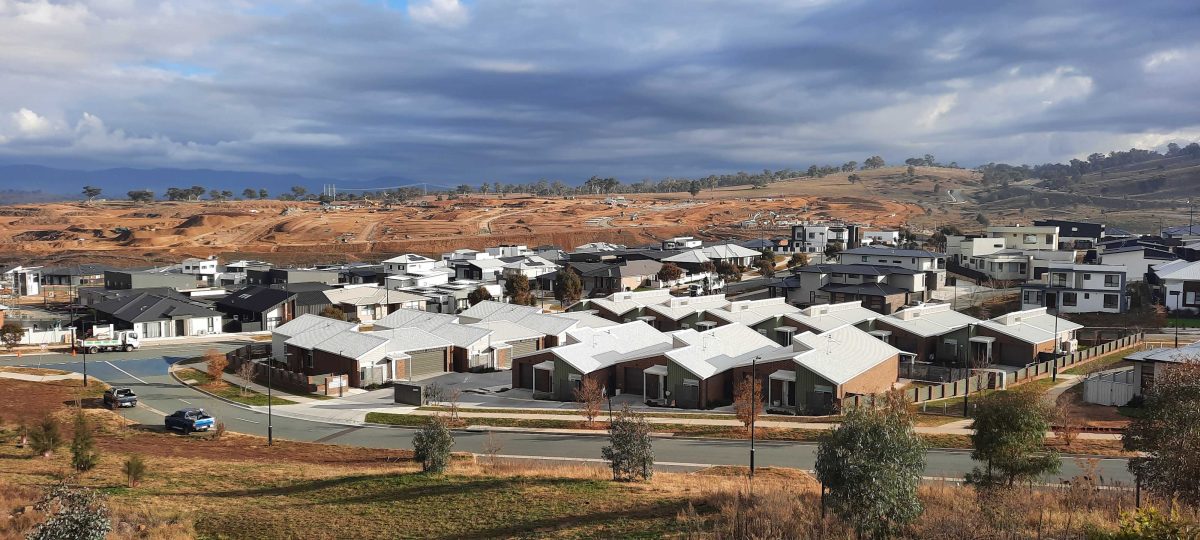
New housing in Whitlam on the western edge of the ACT. Photo: Ian Bushnell.
Major General Dunn said the report was not saying that cities should not grow or people not live close to the bush, but they needed to be aware of the risk and be prepared, while governments needed to reinforce emergency services and land agencies managing the interface, as well as cut more deeply into emissions from the burning of fossil fuels.
He said the ACT had not followed through on recommendations from the 2003 bushfire inquiries for the ESA to be an independent agency directly answerable to a minister, instead of being part of the Justice and Community Safety Directorate.
“I think the message in this report is perhaps the ACT government needs to review that decision,” said Major General Dunn, who headed up the ACT Emergency Services Authority created after the 2003 fires.
It would mean less bureaucracy, with the ESA advising ministers firsthand on what needed to be done and give the community a single agency to go to, he said.
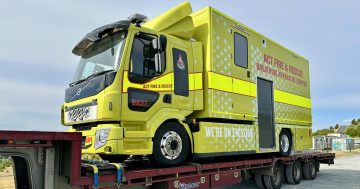
Major General Dunn welcomed the new ESA facility in Molonglo but said the ACT should also be seeking more funding from the Commonwealth to boost its firefighting capacity further, including volunteer services, because local government areas were hopelessly underfunded to do this.
“So the governments have to look at how fast they’re actually planning to increase the emergency services,” he said
“We have to have a very rapid response, we’ve got to have very good surveillance and people have got to be very aware of the dangers that these fires produce.”
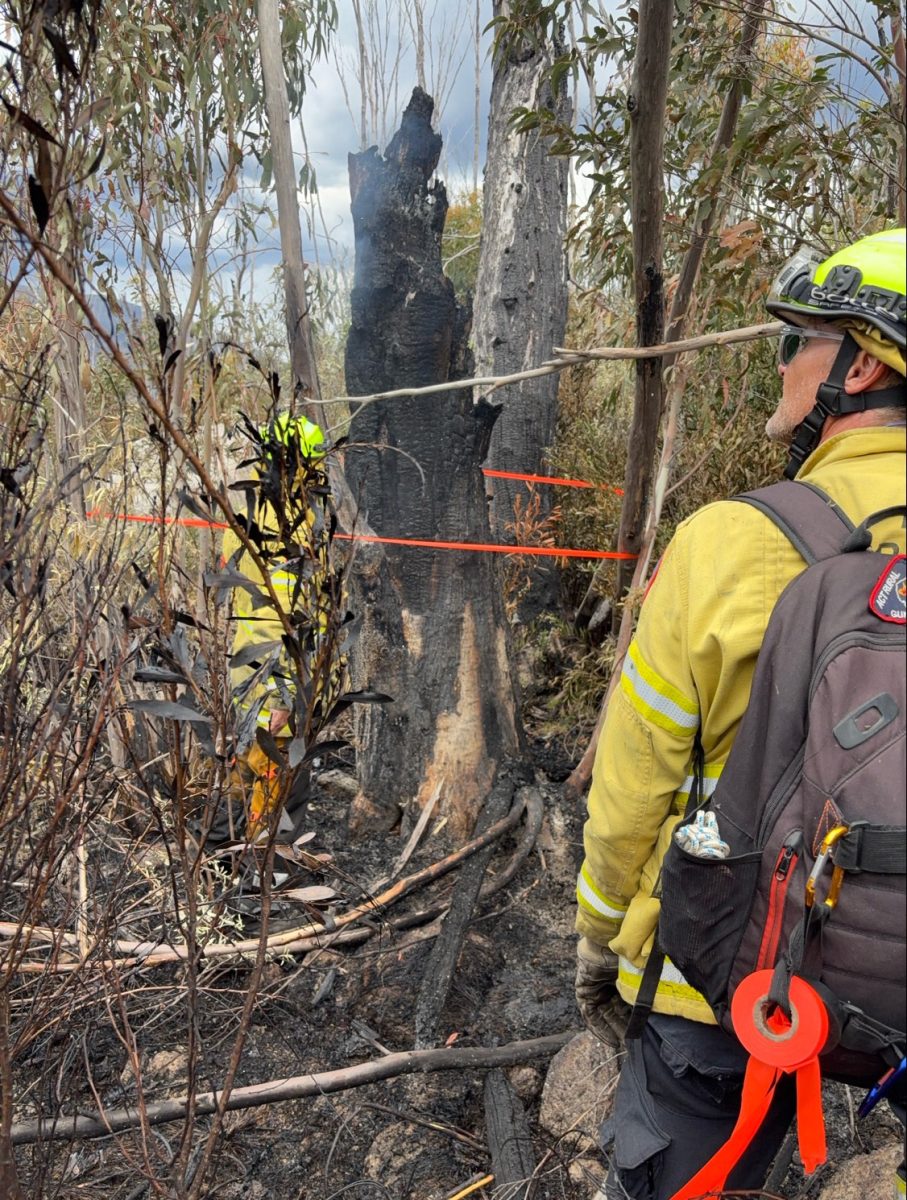
An ACT RFS crew on the ground in Namadgi National Park. Photo: Supplied/ESA.
Major General Dunn said land management agencies needed to be funded appropriately to look after the urban-bush interface, including controlled burning.
“For First Nations people the rule of thumb is clear around the camp and don’t burn the canopy,” he said.
“We’ve got to clear around the camp. The camp in this case is the north and west of Canberra.”
The report also says communities themselves needed to be better prepared for fire and that homes be retrofitted to bushfire standards.
But it warns that increasingly unpredictable conditions, longer and more intense fire seasons and the propensity for contemporary fires to develop their own storms and cyclonic winds make it impossible for even the most skilled and best equipped firefighting crews to contain them.
Canberra almost 22 years ago endured the southern hemisphere’s first fire tornado, overwhelming emergency services.
Despite benevolent conditions since the 2019 Black Summer fires, the ACT can be regularly prone to LA-like conditions – drought, strong winds, large tracts of bushland adjacent to homes and steep slopes that accelerate fires, the report says.
The report says that increasing the capacity of emergency service and land management capacity at this bush/grassfire interface should be a priority.
This should include looking at options such as paid seasonal deployments, creation of more non-operational volunteer roles or the repurposing of retiring native logging and forestry capacity and machinery to assist with the creation of biodiversity and amenity-rich fuel breaks to protect residential areas.
It urges federal, state and territory governments to invest heavily in disaster preparation and community resilience, including hazard reduction, local disaster planning, education, retrofitting homes to bushfire standards and establishing evacuation centres, while ensuring that emergency services are properly resourced.
“We must do all we can to prepare communities for increasing fire and other disaster risks,” the report says.
“It is well known that disaster risk reduction and community preparation initiatives can generate significant savings and returns on each dollar invested.
“Retrofitting homes to meet current standards, community education, community self-help programs and a focus on prescribed burning to reduce fuel loads coupled with increased support for Indigenous-led cultural burning can all help to reduce risks to life and property.”
The report says there is also an increasing cost to the community of the worsening fire risk.
Insurance losses amount to more than $1.2 billion in the 2003 disaster. Since 2020 insurance premiums have increased by 78 per cent to 138 per cent for homes in bushfire-prone Local Government Areas within Sydney, Melbourne and Perth. The cost of the 2019-20 Black Summer bushfires to the economy was estimated at $10 billion.
“It is a matter of when – not if – we’ll experience another fire on this scale, or worse, as dangerous fire weather conditions driven by climate pollution make this a near certainty,” the report says.