
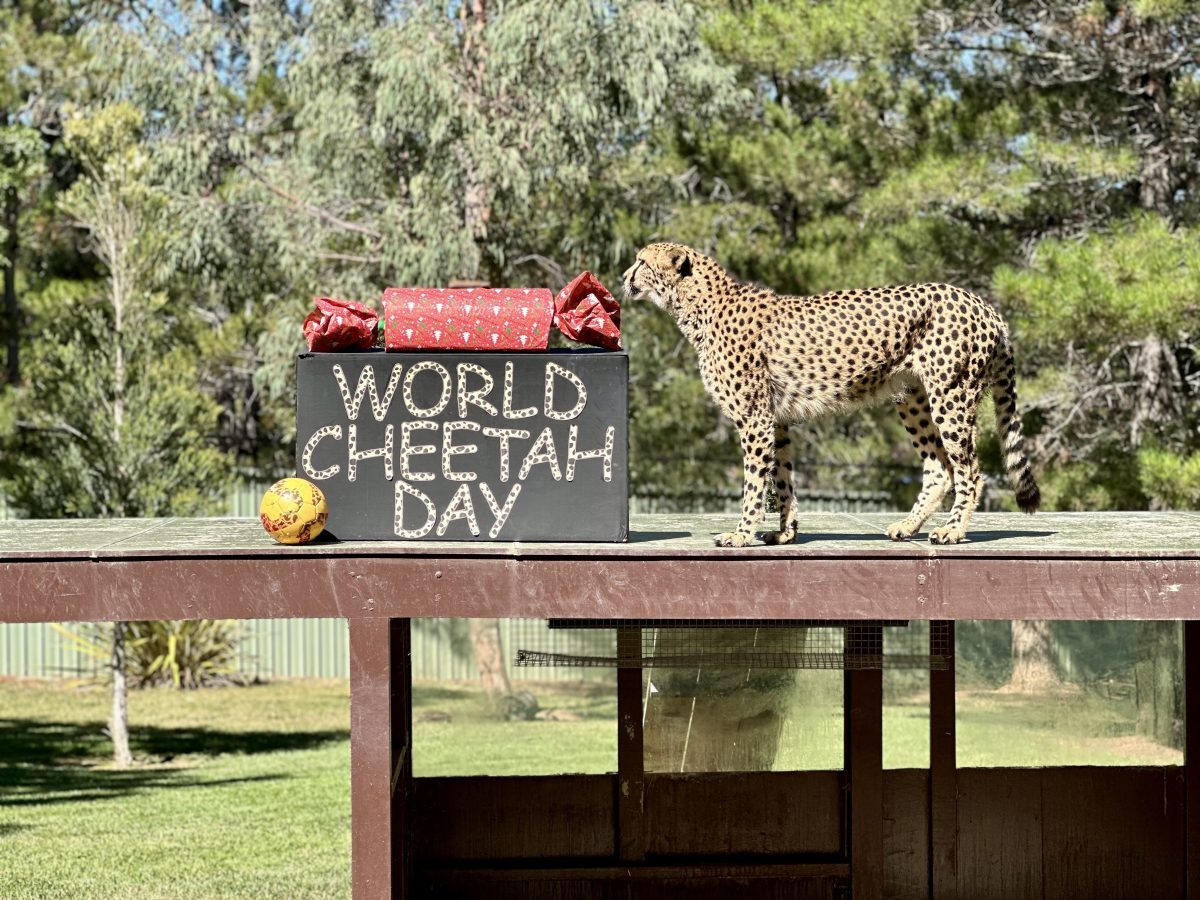
Solo the cheetah, at National Zoo and Aquarium. Photo: James Coleman.
At the National Zoo and Aquarium, the whiff of men’s cologne is proving irresistible – at least to the cheetahs.
As part of World Cheetah Day celebrations this week, the zoo’s seven cheetahs were treated to Christmas-themed “enrichment” – chiefly a giant present doused in their favourite scents.
“The favourite perfumes are mostly like men’s scents, like men’s cologne,” zookeeper Leah Carnegie says.
“Many of the Canberra chemists give us their old tester bottles and we often find the men’s ones are a bit more of a hit than the female colognes.”

Solo is the only cheetah to have been born at the zoo. Photo: James Coleman.
Solo, the zoo’s eight-year-old male and the only cub ever born there, is the biggest fan.
He also loves watching the crowds – especially during school holidays “when all the kids are in all different colours” – and going on regular trips in a car trailer to a lookout over Scrivener Dam – to mimic the way wild cheetahs scour the landscape for prey.
“The best way to enrich these guys is through their eyesight. They have incredible eyesight – they see about 5 km in detail.”
Solo is joined at the zoo by his uncle Jura, long-time residents Ailsa and Zingula, and three younger males – Zambi, Viking, and Asani. And they’re all immensely popular with visitors.
“There’s barely a day we don’t have a cheetah encounter of some sort,” Ms Carnegie says.
“Guests can pat the cheetahs, learn about them, and help support conservation at the same time.”
Here, they can be expected to live for between 12 and 14 years, but it’s a different story out in the wild, where six to eight years is the norm.
“Unfortunately there are only about 6500 cheetahs left in the wild; they are the fastest disappearing big cat in Africa.”
World Cheetah Day was established by the Cheetah Conservation Fund (CCF) to raise awareness about the species’ decline, and boost efforts to preserve them in the wilds of South Africa.

Cheetahs can jump as high as three metres. Photo: James Coleman.
“Their biggest threat is livestock farmers, and they have a lot of conflict with them out in the wild. Cheetahs hunt during the day, so when the farmer wakes up and finds half his livestock gone, he sees the cheetah and unfortunately they cop the blame.”
The CCF is funding a ‘Livestock Guardian Dog Program’ at the moment, which provides large Anatolian Shepherd dogs to farmers free of charge for a year.
“If a cheetah sees a 60kg Anatolian coming at them, they’re going to go the other way. They run away from danger unless it’s absolutely necessary they fight back.”
Habitat loss and predation from larger cats like lions or pack animals like hyenas are other causes for their vulnerability.
Visitors can support conservation through the zoo’s regular Meet-a-Cheetah encounters, which allow 15- or 30-minute interactions while raising funds for organisations like CFF.
“Every dollar counts, but awareness is just as important as well for these guys,” Ms Carnegie says.
As for Solo’s favourite scent? The zoo is still working that out.
“We haven’t had much of a hit with it, but Calvin Klein’s Obsession is a hit across other zoos.”
The National Zoo and Aquarium is open 9:30 am to 5 pm every day, except Christmas Day.