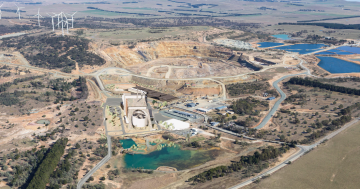

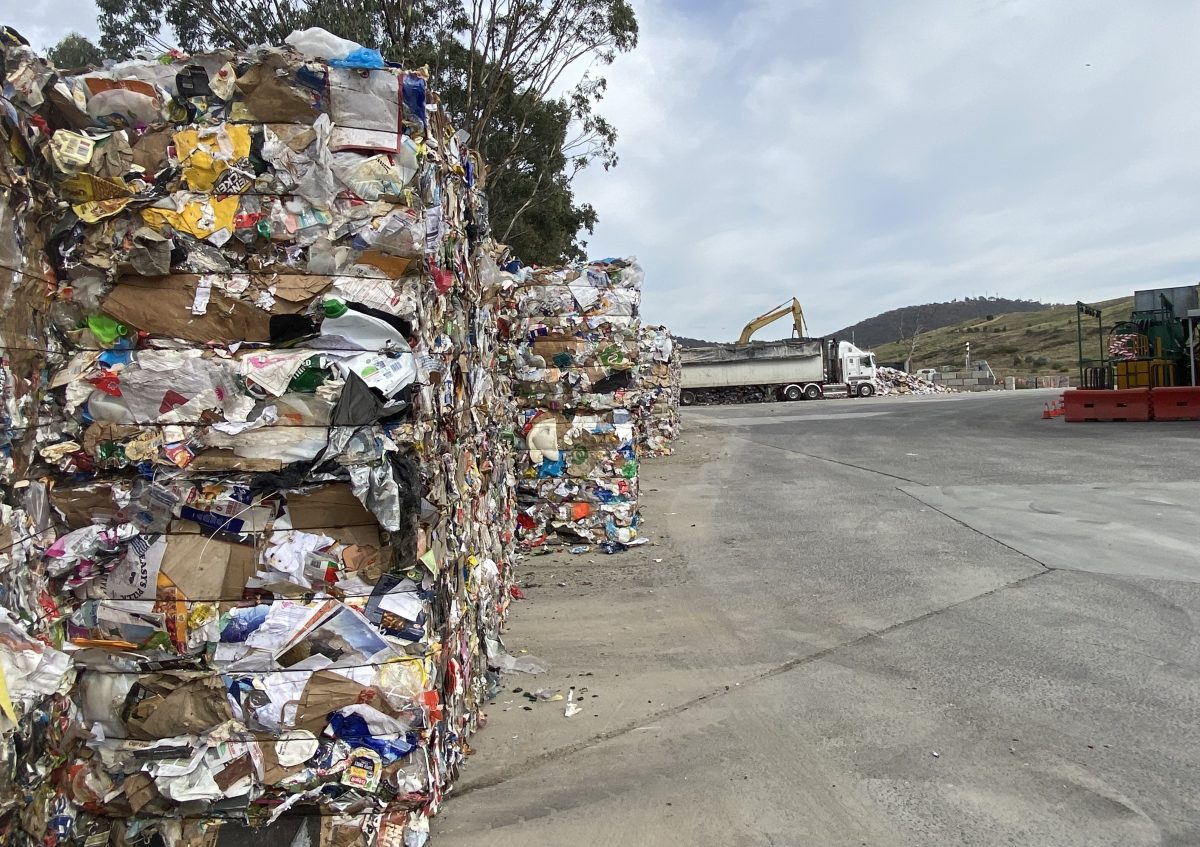
Canberra’s recycling waste continues to be sorted in Hume before it’s transported interstate. Photo: Claire Fenwicke.
The ACT Greens’ deputy leader said she’s “delighted” a legislative update on the Territory’s position that a ban on waste-to-energy incinerators has been extended indefinitely.
Jo Clay recently called on the ACT Government to renew the 2020-25 policy which covers projects such as the incineration, gasification and pyrolysis of rubbish to be turned into energy.
“Following the NSW Government’s proposal for a waste-to-energy incinerator in Tarago, people in Canberra and the Queanbeyan and Goulburn regions have contacted the Greens concerned about the impact it will have on our region,” she said.
“Waste-to-energy produces harmful byproducts and pollutants like heavy metals, toxic air pollutants, bottom ash, furans and dioxins. It poses many risks for people, nature, our waterways, agriculture and our climate.
“Burning waste for energy creates greenhouse gas emissions and is not a sustainable or efficient source of energy.”
When contacted by Region, an ACT Government spokesperson clarified the policy had been extended in May 2025.
“The code of practice remains in force and does not contain an official sunset clause,” they said.
“The principles of the policy, including the ban on the thermal treatment of waste, are established in the Code of Practice.”
Ms Clay welcomed the clarification as she said many people in the region were “nervous” about incineration.
“I’m delighted to hear ACT Government say they’re interpreting their code as a permanent ban on incinerators, despite the fact that it implements a policy that was for 2020-2025,” she said.
“It’s great to have this confirmed. I assume the legislation will be updated when it can be to make it clear this is a permanent ban.”
Capital Recycling Solutions lodged a development application for a waste incineration facility in Canberra in 2017.
The ACT Government spokesperson confirmed no proposals to establish an incinerator had been lodged since the policy was originally released in 2020.
Ms Clay has also urged the ACT Government to get moving on its plans to establish a circular economy in Canberra.
The Circular Economy Strategy was launched in 2023 with food waste recycling identified as a key action to make this happen.
This step has been frustrated by the fire that destroyed the Hume Recovery Facility on Boxing Day in 2022, which resulted in the planned food and organics (FOGO) composting facility’s timeline being pushed back (now not expected to be operational until 2028).
Ms Clay said more needed to be done now.
“In the ACT, we have a resource recovery target of 90 per cent. But our actual resource recovery has dropped to only 65 per cent,” she said.
“We need local recycling facilities that can process household waste so there’s no need to burn it – like soft plastics.
“Instead, the ACT Labor Government sits back and waits for a federal scheme to manage soft plastics, even though it’s taken decades to progress.”
The ACT Government spokesperson said implementing its ACT Circular Economy Strategy and Action Plan was a priority and it had plans beyond the new recycling facility to increase Canberra’s resource recovery rates.
“The Government will also continue to consider problematic waste streams, including single-use plastics with suitable alternatives that can be phased out from circulation and look further at the potential to expand the ACT Container Deposit Scheme,” they said.
“Work is also under way to investigate the feasibility of a textiles hub to reduce problematic textile and clothing waste and support our craft community.”
The old Hume Recovery Facility was demolished in August 2025 and construction of the new facility is due to begin this year.
Current contractor Re-Group will continue providing recycling services until the project is complete, with Canberra’s recycled material being transported interstate.