

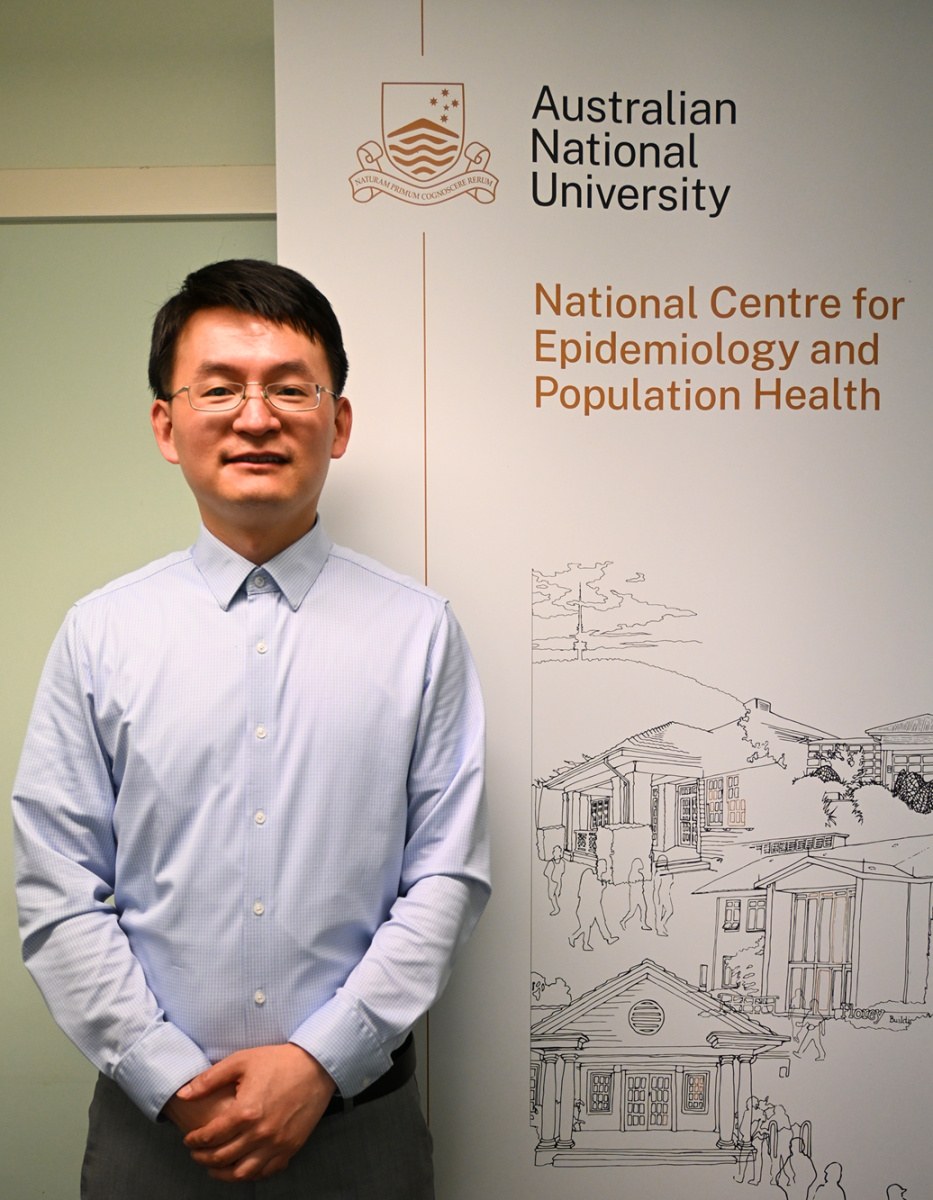
ANU’s Dr Michael Tong led the study which examined how extreme temperatures impact on the health of people living in inland areas. Photo: Supplied.
A new study has found extreme hot and cold temperatures are sending thousands of Canberrans to emergency departments each year and climate change is only expected to put further pressure on inland hospitals.
The study looked at emergency department (ED) presentations in the ACT, as previous similar research has focused on coastal cities such as Sydney, Adelaide and Perth.
ANU National Centre for Epidemiology and Population Health senior research fellow and the study’s lead author Michael Tong said it was important to study an inland region that experienced both hot summers and cold winters.
“Our research found that ED presentations in the ACT increased when temperatures were high, as well as when temperatures dropped below 14 degrees. Extreme weather accounted for about one in 15 ED visits,” Dr Tong said.
“It showed that we need to remind people in inland cities to pay attention to colder temperatures as well.”
The study found almost 36,000 ED presentations between 2000 and 2021 were linked to heat, representing one in 40 (2.5 per cent) of all visits.
But cold weather in the ACT has typically caused more ED presentations. More than 57,600 ED presentations (four per cent) over the two decades analysed were associated with cold conditions.
Using various climate change scenarios to predict future demand, the study found ED presentations related to heat were expected to rise to up to 90,000 presentations (2.7 per cent of all ED visits) between 2040 and 2061 as the climate warmed, while the share of cold-related presentations was expected to fall.
However, cold exposure was still projected to drive more than 81,000 visits between 2040 and 2061.
Dr Tong said there have been instances in the past where humans have survived periods of extreme cold.
But humanity has never been tested to survive extended periods of extreme heat.
“You rarely see a climate disaster movie about the heat, because all humans would die … we’ve never seen how long we can survive when the temperature [is consistently] above 45 to 50 degrees,” Dr Tong said.
“We definitely need to cut carbon emissions, we need to consider heat conditions when building new homes and creating more blue [water] and green spaces in city design.
“The heat is a big concern, so we need to look after the planet and look after ourselves.”
The study also served as a reminder for everyone to take care during extreme temperature events, highlighting the cumulative effects multiple days of hot or cold weather can have on our bodies.
“Our research showed that young people under 20 are significantly more likely to end up in hospital emergency departments on hot days, usually on the day itself. Likewise, adults aged 20 to 60 were at increased risk on both extreme and moderate heat days,” Dr Tong said.
“People aged over 60 were more likely to end up in hospital emergency departments after extreme cold weather, but also are still vulnerable during heatwaves.”
It’s hoped the findings will be used to address the need for region-specific climate change adaptation strategies to mitigate the growing health impacts of temperature extremes, protect vulnerable populations in the inland areas and prepare healthcare systems for projected changes in heat- and cold-related illnesses in the future.
ANU National Centre for Epidemiology and Population Health director Professor Hilary Bambrick said this reinforced warnings that climate change was presenting one of our biggest public health challenges.
“This study shows that even a small increase in local temperature can make people unwell and this intensifies pressure on our hospitals,” she said.
“How we stay safe in a hotter climate and how we ensure our health systems can cope with additional load are now urgent priorities.”
The study has been published in the Australian and New Zealand Journal of Public Health.