
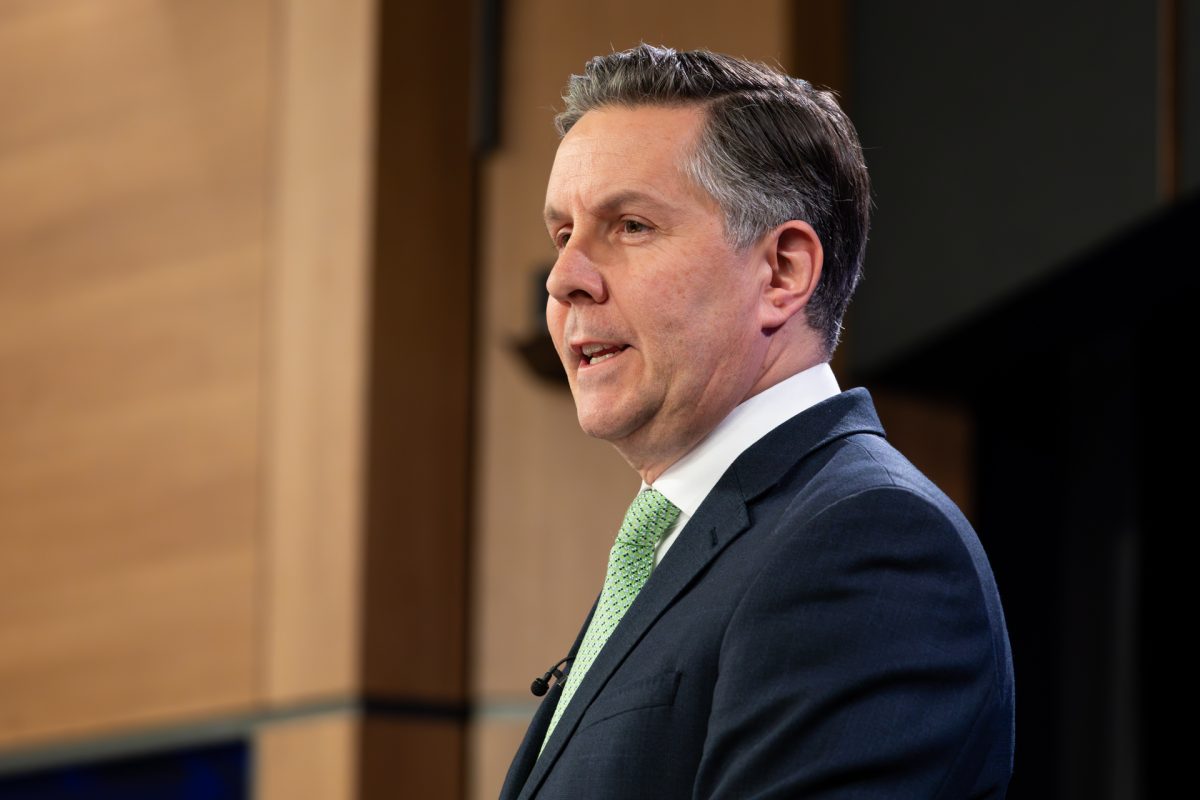
Health Minister Mark Butler has released the latest round of NHMRC scholarships. Photo: Michelle Kroll.
Groundbreaking medical research into women living with multiple sclerosis (MS) is one of almost 70 projects to be given a boost from new Federal Government grants.
Sixty-seven health and medical research graduates will benefit from the latest round of scholarships delivered through the National Health and Medical Research Council (NHMRC).
One project focusing on women living with MS will investigate how menopause and ageing affect symptoms, thinking and quality of life.
Led by Dr Jessica Redmond from Monash University and The Alfred, the PhD research will assess two under-researched areas — the menopausal transition in women with MS and the use of novel visual and brain-imaging biomarkers to track ageing and disease progression.
MS is an autoimmune neurodegenerative condition that affects three times more women than men.
While most diagnoses occur between 20 and 40, people aged 50 and over now make up a large proportion of those living with MS.
The research will explore how menopause symptoms overlap with MS and whether advanced eye imaging can detect signs of accelerated ageing, helping predict disability earlier and improve care for women as they age.
Dr Redmond said her project addressed critical gaps in care for women living with MS during midlife, when biological ageing, hormonal change and disease progression intersected but were poorly understood in clinical practice.
“By clarifying how these factors influence symptoms, cognition, disability and quality of life, and by developing practical biomarkers of neurodegeneration, this research has the potential to reduce diagnostic uncertainty, improve personalised care and inform national policy,” she said.
“I am deeply motivated by the opportunity to give visibility to women’s lived experiences and translate their priorities into meaningful improvements in care.”
Health Minister Mark Butler announced the outcome of the most recent NHMRC Postgraduate Scholarships scheme, saying the “67 outstanding graduates” would receive scholarships to pursue research that spanned the full spectrum of health.
He said the Federal Government was investing in the next generation of Australian health and medical research leaders to empower the brightest minds to pursue innovative ideas and drive scientific discovery.
“These scholarships strengthen our ability to tackle tomorrow’s health challenges and deliver breakthroughs that improve lives,” Mr Butler said.
“Research like this into MS and ageing will help improve care for women living with MS and ensure they have better quality of life as they age.”
The scholarships give early-career researchers training and support to conduct world-class research and build the skills to lead original, independent projects that improve health outcomes for Australians.
The government is investing $10.1 million into the scheme.
NHMRC CEO Steve Wesselingh congratulated all the scholars receiving funding in the latest announcement.
“Our health and medical research system relies on collaboration and sharing of knowledge to accelerate discoveries and their translation into practice to solve health challenges,” Professor Wesselingh said.
“This collaboration begins with our new graduates.
“This investment through NHMRC’s postgraduate scholarship program supports not just the individual researchers but also helps to build Australia’s future research capacity.”
Full details of the researchers and projects funded are available to download from the NHMRC’s website.
Outcomes for NHMRC grant applications are provided incrementally throughout each year.
The NHMRC and the Department of Health, Disability and Ageing — which is responsible for the Medical Research Future Fund — have launched a new requirement for 2026 applicants for funding from their grant programs.
Applicants must consider sex, gender, variations of sex characteristics and sexual orientation (described as the variables) at all stages of their research project and integrate the relevant variables in the research, where appropriate.