
9 November 2025

The science behind traffic lights - and why they're chosen over roundabouts

| By James Coleman
Join the conversation
38
Traffic lights

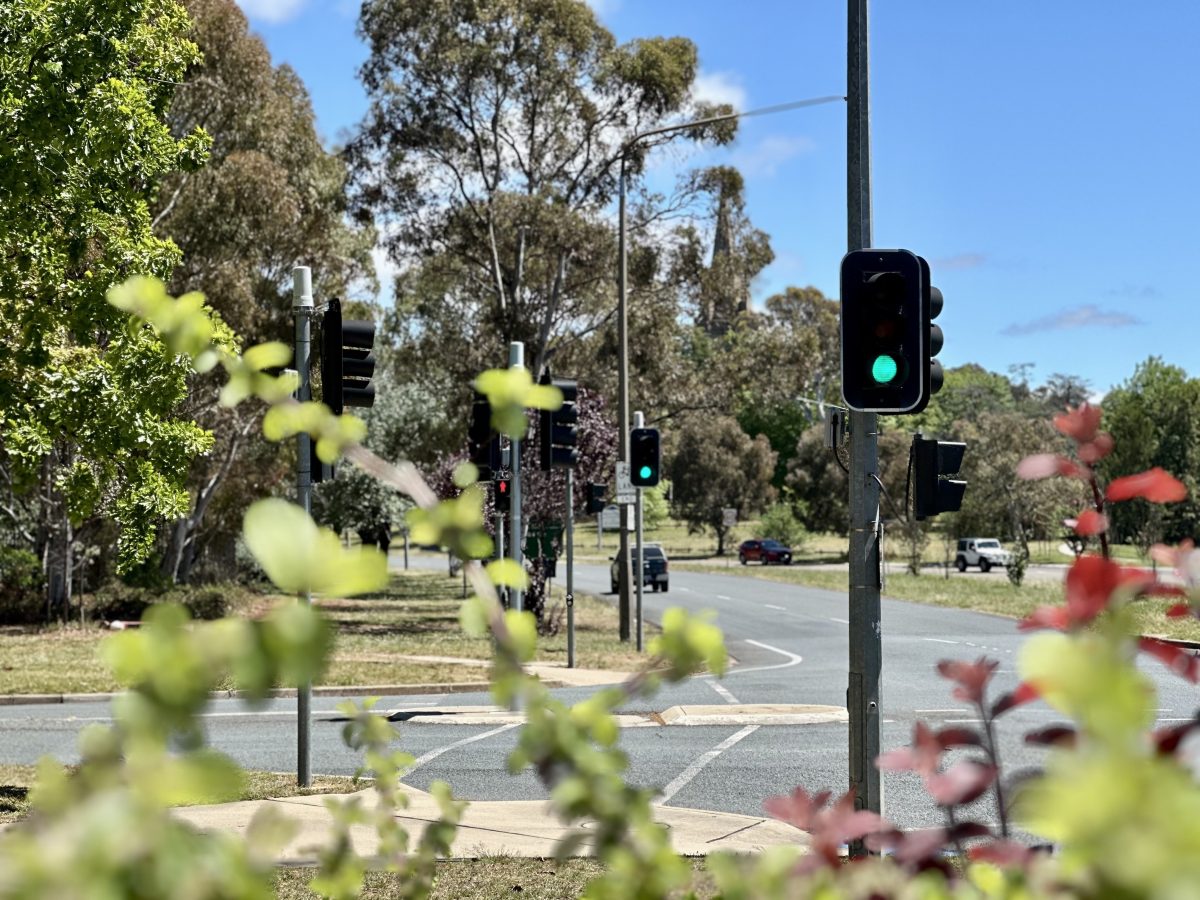
Are traffic lights overused in Canberra? Photo: James Coleman.

Most traffic lights in the ACT are correctly placed – but a national transport research body says that will change if a new set on Tuggeranong’s Drakeford Drive is approved.

The National Transport Research Organisation (NTRO) has offered “innovative research and practical solutions across all modes of transport including roads, rail, ports and airports” to Australian governments and companies for more than 60 years.

With a petition currently before the ACT Government for new lights to be installed at the intersection of Drakeford Drive and Noorooma Street in Isabella Plains, we decided to pick NTRO CEO Michael Caltabiano’s brains about how traffic lights are chosen – and why they’re either loved or loathed.

How are traffic lights chosen? Over say, roundabouts?

Australia road design guidelines lay out four levels of intersections – including uncontrolled (or unsignalised), roundabouts, signalised and grade-separated.

“That’s a sort of escalation as a consequence of traffic growth, but also risk: Are there pedestrians, are there cyclists – is there an active transport risk?” Mr Caltabiano says.

“Designers have to balance volume increases on all of the intersection’s ‘legs’ – so it’s not just about one main thoroughfare – and choose a solution based on the needs of that specific location.”

For an uncontrolled intersection to become a signalised intersection, the guidelines stipulate that volume on both roads has to reach at least 600 vehicles per hour.

“That triggers the start of looking at signalisation.”
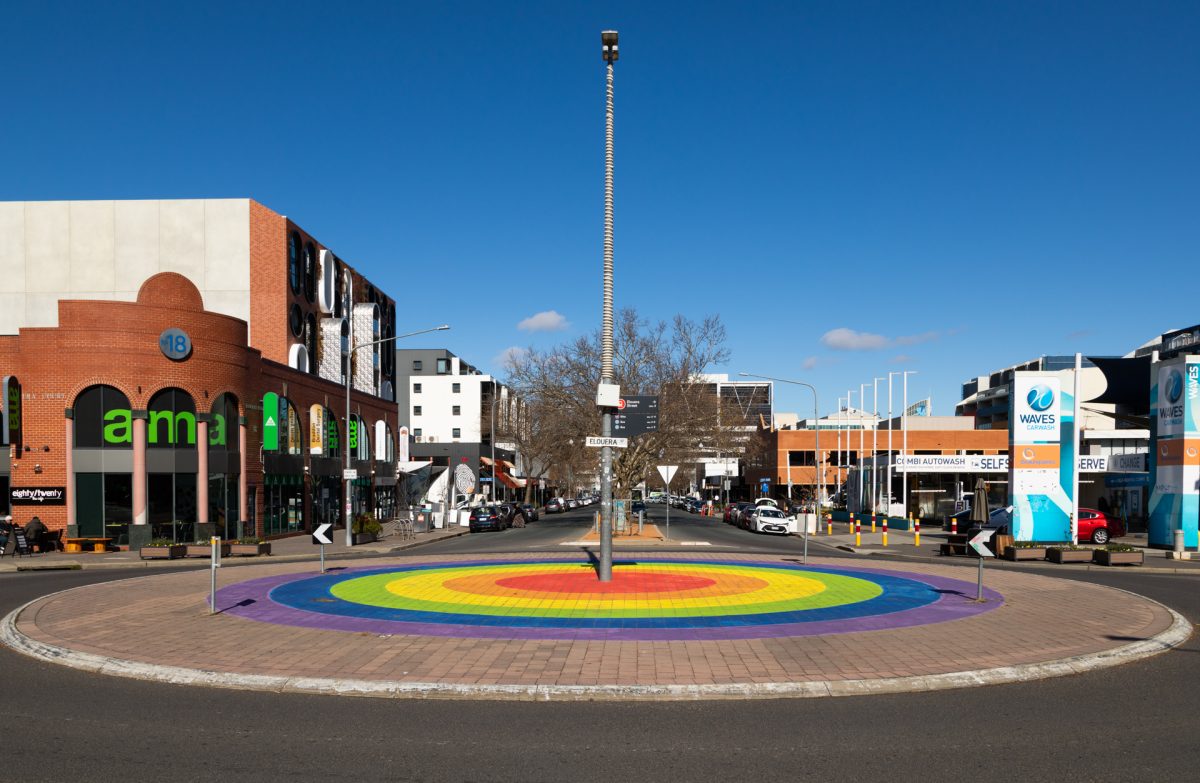
Brightly coloured roundabout.

Roundabouts only work when all streets carry comparable levels of traffic. Photo: Michelle Kroll.

Where do roundabouts fit in?

“Roundabouts are a great measure for distributing moderate to high, balanced volumes of traffic – so roundabouts function where all four legs have an equivalent volume of traffic,” Mr Caltabiano explains.

“They don’t tend to function very well when there’s a main road and little side roads – that’s not what they’re designed for, unless there’s an overarching pedestrian or cyclist problem.”

And the cons to traffic lights?

“They stop traffic. Planners should be aiming to keep traffic moving in a safe and orderly way – that’s the highest order priority – and they’ve got to use the mechanisms and tools available to them to keep the traffic moving in a safe and effective way.”

Poorly placed traffic lights also have knock-on effects like pushing motorists to use rat runs through adjacent streets – increasing pressure on smaller streets that are really not up to the job.
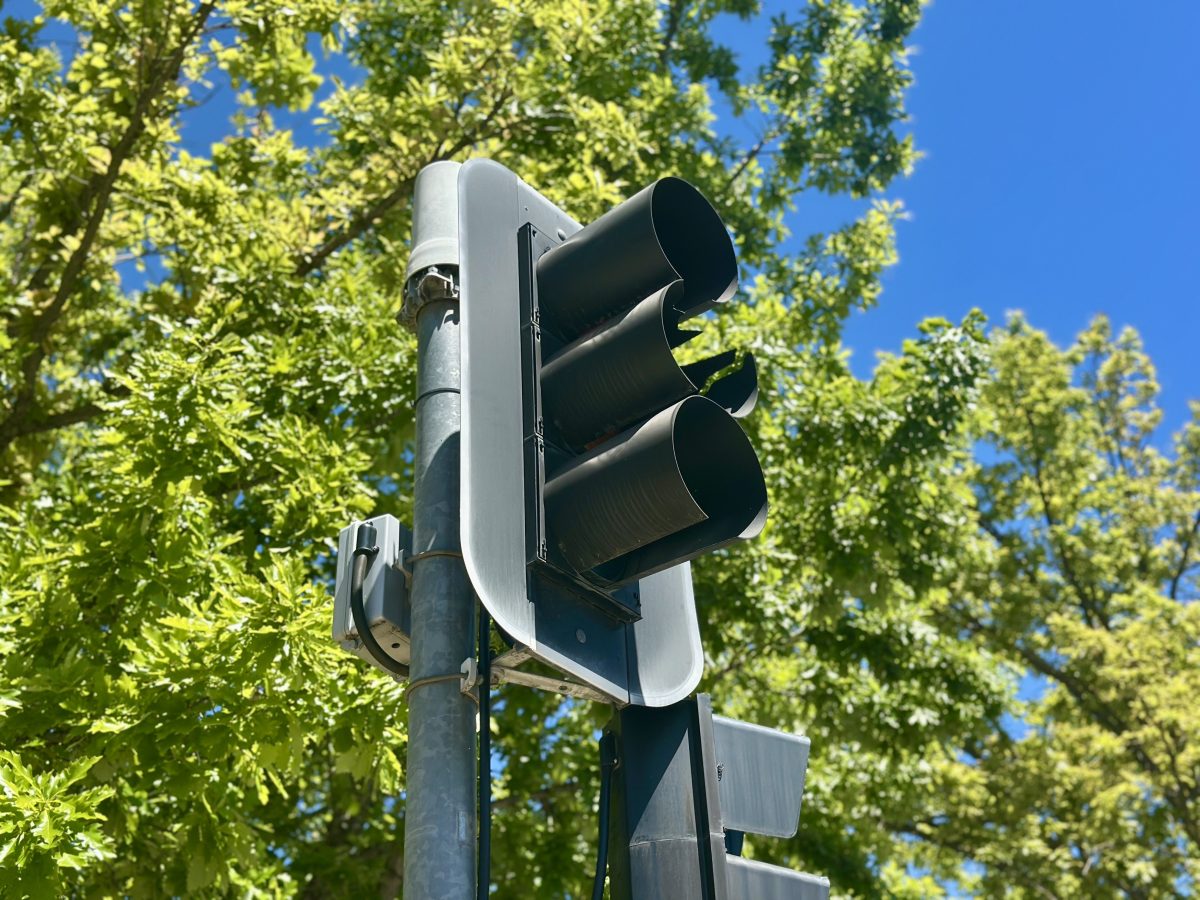
Traffic lights

Badly placed traffic lights can cause more problems than they fix. Photo: James Coleman.

Can I have an example?

In the petition for the new Drakeford Drive lights, the sponsoring ACT Labor member Caitlin Tough writes that “newer residential developments in the area have increased traffic along Drakeford Drive and surrounding streets” to the point the intersection has become “a serious safety risk”.

“During peak hours, the only way many motorists can cross is by dangerously accelerating beyond the speed limit to make it through momentary gaps in traffic,” it reads.

The petition also cites two fatal collisions at the site, one in 2011 involving an 18-year-old boy on a motorbike, and another in 2021 involving a 78-year-old woman in a two-car crash.

READ ALSO Canberra to Sydney by train in 3 hours? It’s ‘less than a billion dollars’ away

The petition currently has five signatures – well short of the 500 it needs to be tabled within the ACT Legislative Assembly. But using what we’ve learnt so far, there’s another reason it probably won’t get up.

Mr Caltabiano lives around the corner from this intersection and says while the NTRO doesn’t have the traffic-count data, anecdotally, that portion of Drakeford Drive is “a fair way” from reaching the 600-vehicles-per-hour point.

A roundabout wouldn’t work either, because “only very small amounts of traffic” are entering from Isabella Plains.

“You’ve also got Isabella Drive and Johnson Road to the north and to the south of this, which are big roundabouts to circulate traffic … and you’ve got multiple outlets in Isabella Plains to get to those big roundabouts.”
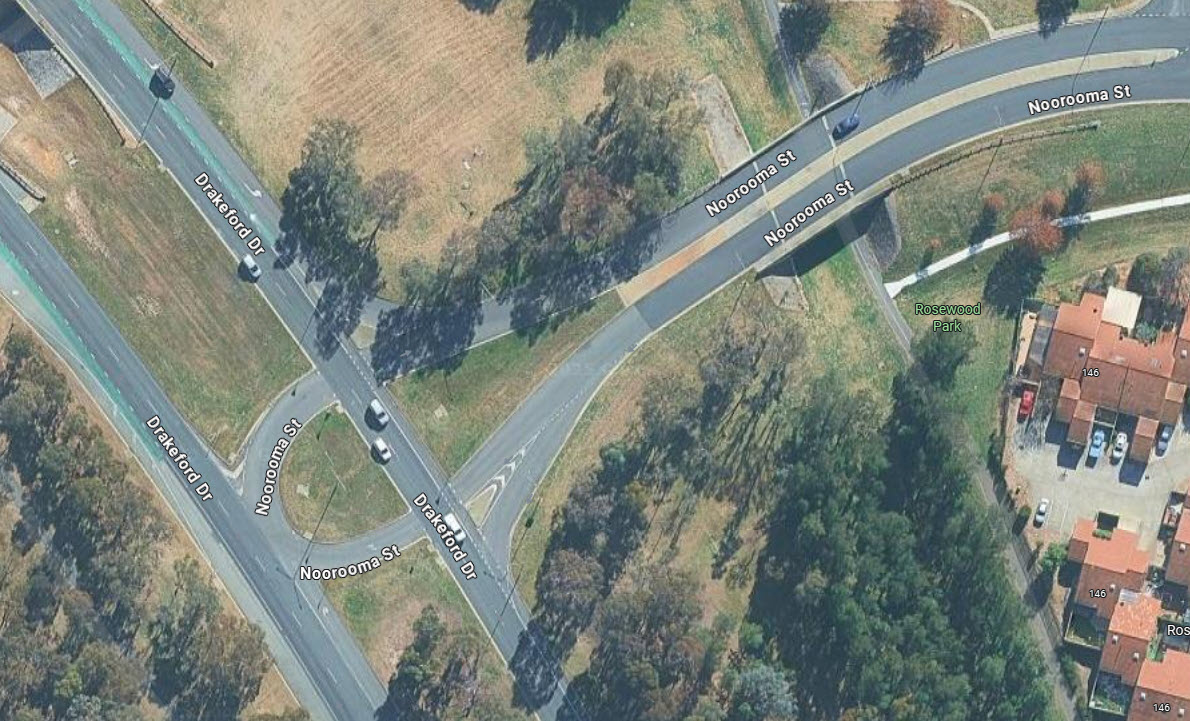
Noorooma Street, Isabella Plains

Noorooma Street and Drakeford Drive is what’s called a “two-stage” intersection. Photo: Screenshot, Google Maps.

The current crossing is called a “two-stage” crossing, where motorists only have to cross one carriageway at a time.

“So you focus on just looking at traffic coming on your right, you cross to the middle, and then you focus left.”

In 2013, the government poured about $20,000 of Black Spot Program funding into the Noorooma Street intersection for better line-marking and signage to improve safety, and Mr Caltabiano says it’s likely the planners will conclude it’s still up to the job.

“They’ll have a look at the Isabella Drive roundabout and the Johnson Drive roundabout and how Noorooma Street feeds into that, they’ll look at generators of traffic – so if there’s a school or aged-care facility nearby, and they’ll come down and literally count traffic.”
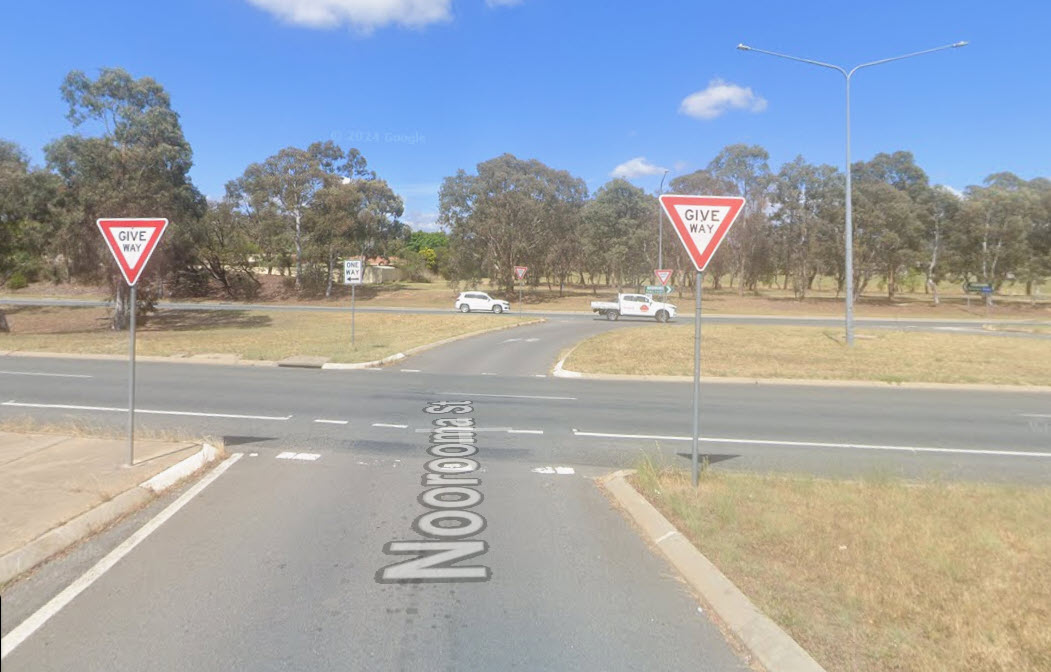
Noorooma Street, Isabella Plains

Additional line-marking and signage was installed along Noorooma Street in 2013 to improve safety. Photo: Screenshot, Google Maps.

According to the Australia Bureau of Statistic’s latest growth predictions for the ACT, Tuggeranong is only expected to grow by 26,000 people by 2065 (91,387 to 117,994).

And honing in on Isabella Plains, only about 150 houses have been added to the suburb in the past 15 years.

“So there’s not a lot of residential growth expected, and that’s one of the things planners will look at … It’s never just one thing, ever.”

READ ALSO The Canberra cyclist putting her ears on the line to test your magpie myths

So why so much hate for Drakeford Drive (and Hindmarsh Drive) then?

Mr Caltabiano says the track record is good for most of the ACT’s traffic lights being the best solution to whatever problem was there before.

“They’re very expensive as well, so nobody’s going to make a multi-million-dollar decision to put in traffic lights where they’re not warranted.”

But it’s not quite a perfect score for the ACT’s planners.

“The only issue in Canberra with traffic lights is the coordination of the traffic lights, particularly in the CBD area. And that needs massive improvement.

“But the location of them and the purpose of them – I’ve not heard of any issues with that.”

Free Daily Digest

Want the best Canberra news delivered daily? We package the most-read Canberra stories and send them to your inbox. Sign-up now for trusted local news that will never be behind a paywall.
Loading
By submitting your email address you are agreeing to Region Group's terms and conditions and privacy policy.

Join the conversation

38
All Comments
  • All Comments
  • Website Comments
LatestOldest

“During peak hours, the only way many motorists can cross is by dangerously accelerating beyond the speed limit to make it through momentary gaps in traffic,” [the petittion] reads.
Wow – I’d like to see a car that can accelerate beyond the posted 80km/h limit in the distance of crossing two lanes of traffic!

Why not signalise the roundabout. Busy for less than a few hours a day then everyone penalised all day and night, roundabout works fine most of the 24 hour cycle. Barton highway is proof of this. What a huge waste of money!!!

I hope they mark it better than the Barton Highway one where the arrows direct traffic the wrong way into the intersection (they should have used oblique arrows on the approaches)

Two things.
I lived in Isabella plains from 1990-1996. There were traffic lights at the Drakeford Dr, Isabella Dr Athlon Dr intersection and they were woeful during afternoon peak time. Why would a set a few hundred metres sout be any better.

Secondly anyone with half a brain would exit Isabella Plains via Drumston St and and Isabella Drive during busy times of the day if the Norroma St intersection is too much for them.

Agree, or exit out onto Johnson Dr. if heading south – unless you’re going directly across to Bonython, neither of the other options would add much distance or time anyway.

Being that I live in Tuggeranong, I’ve driven a long Drakeford Drive plenty of times but haven’t noticed a need for more traffic lights.

There is very little actual science in traffic engineering. Many of the key thresholds, like the 600 cars per hour referred to in this article, are based on arbitrary decisions, often made by an individual in the distant past, which have become gospel sinply through repeated use.

Is the minister a local resident?

Seems like a non issue with 5 signatures. Surely the average person would have more than 4 friends

The biggest problem with ACT roundabouts are lazy drivers. Instead of looking ahead many drivers don’t check for traffic until they have slowed or stopped. Drivers should be checking 100m before. Then slow as necessary to match the holes in the flow of traffic. Those last 100m are not the time to start a discussion, reach for a drink, start wondering if you are in the correct lane or slow beyond what is needed when there is no traffic around. Too many people are too lazy to to use brain power to concentrate on estimating the speeds required to merge (yes other than poached egg roundabouts, the process is merging). As for the intersection in question, if you can’t estimate for a right turn, turn left and use the next roundabout to do a U turn.

The problem I’ve noticed with roundabouts in the ACT is not many people know how to use turn signals. I’m driving through a roundabout but give way to traffic coming from my opposite direction, signalling they’re turning right so I have to give way….only to see them drive straight through the roundabout.

The main issue with roundabouts in canberra is that there are many inconfident drivers who hesitate too long reduce the throughput.
The traffic lights on hindmars and drakeford drive are synchronized very poorly. When driving the speed limit with a normal acceleration you often hit every single light turning red just a smidge too early. Or you see the next intersection turning red just as yours is turning green

I’ve noticed there’s a set of traffic lights on the Hindmarsh when turning right onto the Monaro Parkway the Green Arrow doesn’t stay green for long.

chrisjeanemery7:15 pm 09 Nov 25

All of Canberra’s traffic signals are linked to central computers and to each other. I think the linking doesn’t work very well, compared to the same system in Sydney.

Ross of Canberra3:39 pm 14 Nov 25

‘Same’? Yes, it’s the same company yet achieving glaringly different results.
For the first time in 5 years, last week around 2pm, I had green lights all the way from Hungry Jacks, Greenway, up to Hindmarsh Drive. It’s not timing, it was just luck.

The science may be contemporary, but the technology isn’t, and that’s a big issue for efficiency and global warming.

Lights that make a driver stop frequently and/or wait over 15secs when nothing is about, besides being plain irritating (and in itself a safety hazard), do nothing for efficient traffic flow or stemming greenhouse gas emissions (from ICE vehicles).

Huh? I understand what you mean by “…when nothing is about…” but how does this effect global warming exactly? and what do you mean “from ICE vehicles”?

Karl Herzog: ICE stands for internal combustion engine (inserted to head off EV arguments). Their emissions contribute to nasties in the atmosphere thus unnecessary idling for traffic lights (that should have changed, but haven’t because of old control technology), is adding to said nasties and thus warming. One vehicle delayed unnecessarily once is negligible in effect, but lots of vehicles day in day out add up.

The ACT Government don’t seem to understand this simple fact.

Adding traffic lights is their answer almost always.

More roundabouts please
Recently driving around Italy I was amazed at how few stop lights there are. There roads are chaotic and much busier than ours, but they have many more roundabouts some of them quite complicated with more like 6 or so feeder roads.
They make them work and the traffic keeps flowing.

Leon Arundell12:47 pm 09 Nov 25

Coordination of pedestrian signals needs massive improvement.
It takes about 45 seconds to walk across Northbourne Avenue, and less to walk across Barry Drive or Antill Street.
Because of “scientific” pedestrian signals, it can take more than three minutes to legally cross Northbourne Avenue, Barry Drive or Antill St.

Try walking across Canberra Avenue during morning and afternoon peak hours (when public servants, parents of school kids, older school kids and tradies are each in their vehicles) to get to Kingston. There’s no pedestrian crossing, no traffic lights and no overpass.

Roundabouts are OK until the jungles in the middle get so high, your view of cars turning are blocked. Then they become dangerous

Daily Digest

Want the best Canberra news delivered daily? Every day we package the most popular Region Canberra stories and send them straight to your inbox. Sign-up now for trusted local news that will never be behind a paywall.

By submitting your email address you are agreeing to Region Group's terms and conditions and privacy policy.