
7 November 2025

United call for first national inquiry into racism at work

| By Chris Johnson
Join the conversation
36
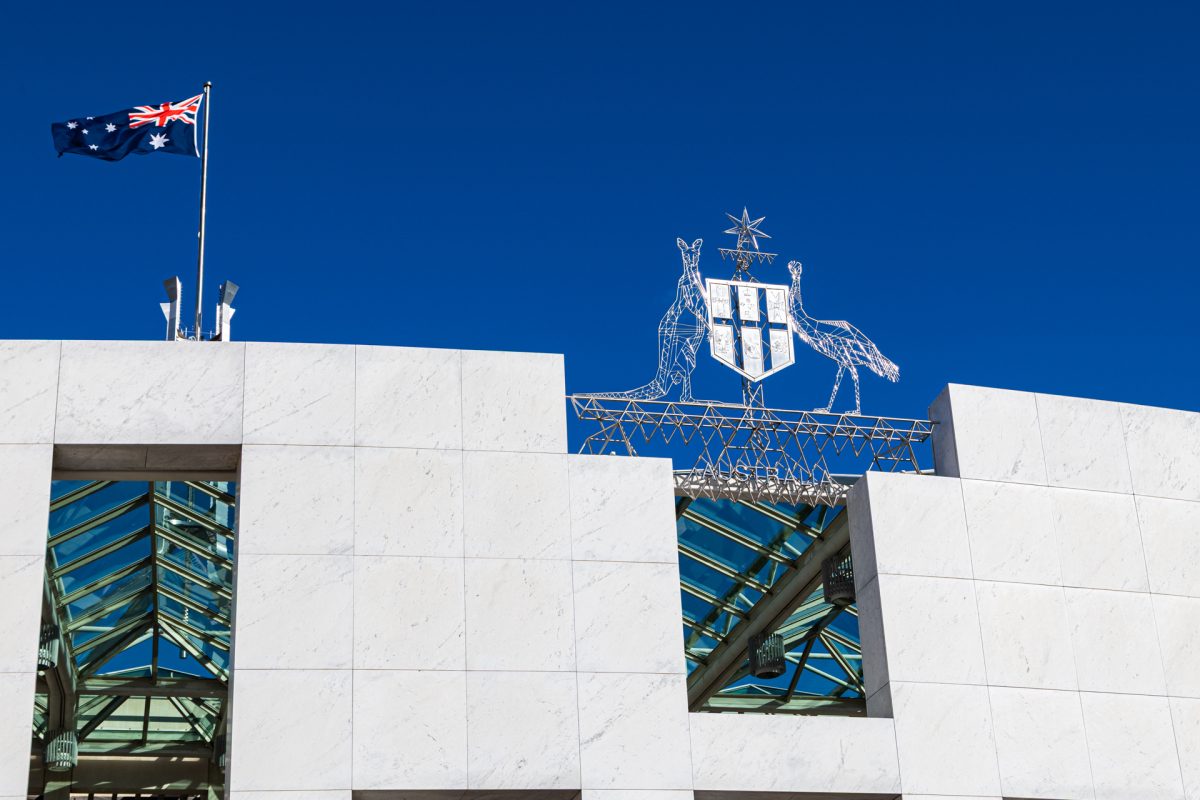
Australian Parliament House

Australian Parliament House. Photo: Michelle Kroll.

The Human Rights Commission has joined with unions, academics and community leaders in calling for the first national inquiry into racism in the workplace.

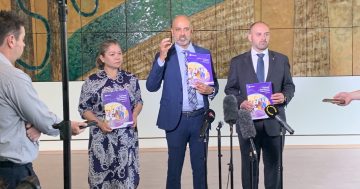
Gathering at Parliament House, Australia’s Race Discrimination Commissioner Giridharan Sivaraman and Australian Council of Trade Unions president Michele O’Neil said an inquiry focusing specifically on racism in Australian workplaces was needed.

They were joined by University of Technology Sydney’s Nareen Young from the Jumbanna Institute, which aims to produce the highest quality research on Indigenous legal and policy issues.

Social justice advocates and other attendees discussed the proposed inquiry at a Parliament House roundtable hosted by Mr Sivaraman, Ms O’Neil and Professor Young.

The group wants an inquiry to examine barriers to employment faced by First Nations people and other racialised communities.

It will also explore strategies to address growing reports of what the commission is describing as systemic discrimination, exploitation and hostility in workplaces targeting these people.

“Racism in the workplace is not just a personal injustice, it’s a national issue that undermines safety, wellbeing, fairness, opportunity and productivity,” commissioner Sivaraman said.

“This roundtable is a vital step toward confronting the systemic barriers that persist across industries.

“A national inquiry will help us uncover the scale of the problem and chart a path toward safer, more inclusive workplaces for all Australians.”

Wednesday’s roundtable also focused on ways to improve the work experiences of minority employees from racialised communities; how to address the issue of mismatched skills and underemployment; and tackle racism in job advertising and recruitment practices.

Workplace culture, cultural safety and racism was also discussed; as was discrimination and its effects on being employed and what factor it plays in premature exit from employment.

READ ALSO Free daytime energy proposed, but ACT not in first rollout of federal scheme

“We cannot build fair and productive workplaces while racism continues to shape who gets hired, who gets promoted, and who feels safe at work,” Ms O’Neil said.

“First Nations workers, migrants and refugees have long faced exclusion, exploitation and discrimination. This inquiry is a vital step toward justice and equity.”

The group said the inquiry should join others that have succeeded in standing against racism and workplace harassment.

These include the 1991 National Inquiry into Racist Violence in Australia; the National Inquiry into Sexual Harassment in Australian Workplaces resulting in the landmark Respect@Work report (2020) and Respect@Work Act (2022); and the Commonwealth Parliamentary Workplaces review which resulted in the Set the Standard report (2021).

“Findings from our most recent Gari Yala report show First Nations employees are not only facing racism and increased cultural load, but they are also being retraumatised for simply asserting their right to be safe at work,” said Professor Young, also associate dean at UTS Business School’s Indigenous Leadership.

“It’s time for coordinated action to address the root cause and recommend remedies for systemic racism in our workplaces.”

The roundtable builds on the Australian Human Rights Commission’s National Anti-Racism Framework, which sets out a shared vision for eliminating racism in all areas of Australian life.

The framework offers a roadmap to help government, business and civil society unite to address racism in all its forms. It includes research and insights from consultations with First Nations and multicultural communities.


Free Daily Digest

Want the best Canberra news delivered daily? We package the most-read Canberra stories and send them to your inbox. Sign-up now for trusted local news that will never be behind a paywall.
Loading
By submitting your email address you are agreeing to Region Group's terms and conditions and privacy policy.

Join the conversation

36
All Comments
  • All Comments
  • Website Comments
LatestOldest

I can’t stand prejudice of any kind but what I’ve noticed over the years of working in various different work places is that….racism isn’t just white people hating other races, unfortunately racism has many faces but we tend to excuse prejudice against certain people but not another. If we’re genuine about “fighting to get rid of racism” we need to change our mindsets and loosen the tight grip on our identities.

Karl I heard an example last week of a department where a woman of West Asian origin was complaining that there was a bias towards women of East Asian origin. How many rabbit holes should all this stuff head down ?

This opens up a whole level of unknown consequences.

Let me say this upfront. Racism is abhorrent.

The concern have with this type of review is that outcomes may be unworkable in the real world.

I was in a work environment some years ago where a colleague took offence to the action of another colleague. Needless to say, the “offender” HR became involved and the “offender” was severely reprimanded.

The “offender” had no idea that he had insulted a guy whom he considered a friend.

I was one of many who were interviewed over the incident and simply asked “How is it possible that everyone can be aware of what is acceptable and unacceptable, in cultures that they were not brought up in”?
I didn’t receive a reply.

So yeah, treat everyone as you would hope to be treated yourself, however, go easy on legislating unworkable laws.

That’s a really good point and a good example of a culture clash. The general rule is “when in Rome…” but unfortunately it sounds like this was lost on your previous workplace. What disturbed me too is that it sounds like HR didn’t make an effort to understand the situation.

David Watson2:06 pm 07 Nov 25

The conclusions are obvious and well know and the solutions are like smoke. Just another attempt to make Australians believe we are the most racist country in the world. Lets see government funds saved and not wasted any more than they are now.

I reckon we’re not the MOST racist but we are very racist. Since school well into the workplace, I’ve lost track of the amount of racist comments I’ve heard and what I’ve witnessed. But the racism in Australia isn’t as aggressive as in most countries and from what I’ve heard from a lot of people of different backgrounds, any racism they encounter is mild.

In the last 20 years in the Public Service, I have not witnessed any racism. Like most government departments, mine like to identify indigenous people and count the number in various positions even though most if not all just wanted to get on with job on equal terms.

“In the last 20 years in the Public Service, I have not witnessed any racism. “

I find this very hard to believe when actual Nazis were involved in organising and leading the first March “for” Australia and Nazis stood on the steps of the NSW parliament over the weekend.

Yeah but that doesn’t necessarily mean those Nazis were in the Public Service.

I didn’t say there were but it’s clear that there are racists in Canberra, they literally marched here, so it seems very unlikely that in 20 years he’s never seen racism.

I don’t know if it is APS wide but there is at least one large federal government department which gives additional paid holidays to people of non-Christian faiths.

They get the Christian religious holidays and also a few (four days?) of own.

Yes, that’s religious discrimination not racism, but the two are often conflated.

So would such a national enquiry investigate such “racist” behaviour especially as it is obviously supported by the federal government and the Union?

Most Departments offer “ceremonial leave” to Indigenous people.

Correct, that’s not under the category of racism therefore not relevant but yeah….it is prejudice.

No, it is not prejudice either. It is a form of discrimination, the question being relative justness where there are many considerations.

Stephen Saunders11:16 am 07 Nov 25

Sivaraman and O’Neil automatically assume that racism in the workplace is white on black. They would never examine, Indianised workplaces shutting out Australians, as they do.

Or Indian people in Australia being excluded by other Indian people due to caste. This has been well documented but ignored by the HRC.

No, the enquiry is into racism, at no stage is it limited to “white on black”, only you’ve assumed that… I wonder why that is?

If you read my previous comment I’ve point out that racism has many faces. I’ve never encountered what you’ve mentioned though, sadly I have encountered a lot of people expressing prejudice and rejecting Indian/Pakistani people.

A more useful inquiry would be about what a waste of taxpayers money the Human Rights Commission is.

In this day and age, this sounds a lot like a solution looking for a problem.

Whenever someone uses the term “social justice” they may as well just say “woke”.

Define “woke” without sounding silly…sorry…sillier.

Meanwhile racism isn’t over “in this day and age” because some who are likely unaffected by it refuse to accept it happens.

See you can’t define it because it’s a meaningless term that’s become a whinge for everything the far right don’t like.

Yawn.

Far right, that’s anyone who’s not a green isn’t it ?

Far right is pretty much anyone who so very bravely online uses the word “woke” as a pejorative but can’t define it.

Defining it is easy, but there’s little point as you wouldn’t understand.

It’s so “easy” you won’t do it because you can’t without sounding foolish….lol

As I may have pointed out Penfold, you don’t have to beclown yourself constantly, it’s not a requirement.

Woke: a modern day political term for someone who is “awake” to political issues and social injustice. The definition sounds agreeable but the problem is that people who are described as Woke are really just virtue signalling and are more interested in feeding their ego’s. I used to be Woke…..until I realised this.

That’s not entirely true, I don’t like Woke but I’m neither Left Wing or Right Wing.

They might be awake to those issues Karl, though it’s from a very narrow and particular mindset.

I have been trying to make sense of your post, Karl. Your view is that someone who is aware of social injustice, for example, is just fine until someone else describes them as “woke” and then they transmogrify into “virtue signallers”. Is that right? Please advise your view on how a disinterested person or social justice advocate might be aware of social justice issues without your pejorative reclassification?

Based on your “realisation” about “virtue signalling”, then it appears you must be “thought signalling”; trying to look like it without doing it.

The first thing you should do Axon, in seeking understanding, is to remove all references to the word “right” in that lengthy monologue.

Has keen reader Penfold spotted that I used the word “right” exactly once, when I asked, “Is that right?”. Should one assume it would be far more acceptable to Penfold if I had written, “Is that correct?” or “Is that wrong?”

Alternatively, Penfold referred not to my post but to the article, in which the word “Rights” appears twice in referring to the Human Rights Commission, or exactly once, in the sentence “…their right to be safe at work.” Does Penfold believe there is no right to be safe at work?

Or is Penfold declaring that there should be no rights at all? Is Penfold a closet anarchist? The mystery deepens (but nobody cares).

Daily Digest

Want the best Canberra news delivered daily? Every day we package the most popular Region Canberra stories and send them straight to your inbox. Sign-up now for trusted local news that will never be behind a paywall.

By submitting your email address you are agreeing to Region Group's terms and conditions and privacy policy.