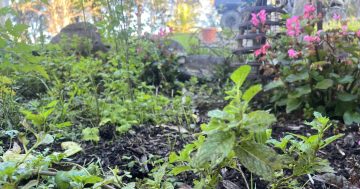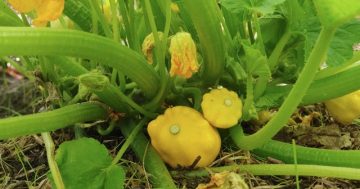

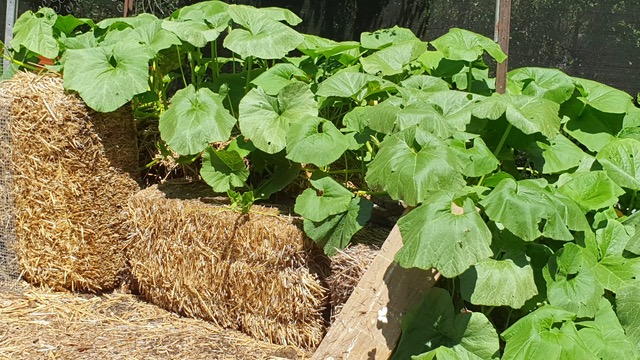
Pumpkins growing in compost. Photo: Wynlen House.
Many parts of our cold/cool climate region are still thirsting for decent rainfall, especially after this week’s heatwave.
The ACT received only around half its usual December rainfall and that deficit is being keenly felt despite some cool rainy weather during Christmas and the new year.
Kitchen gardens are in need of a nice steady dump of rain, followed by more rain, to get some moisture right down to their deepest roots.
An advantage of the continued warm weather is that any pumpkins you have planted might actually ripen before March. Pumpkins were the only crop we grew in the last year of the 2015-2019 drought. They are surprisingly water efficient as are squashes and zucchini.
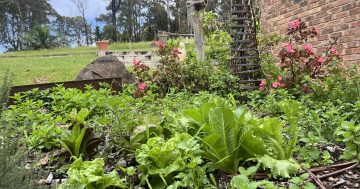
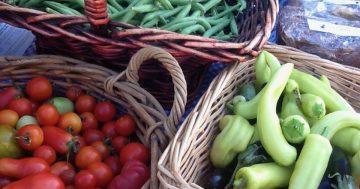
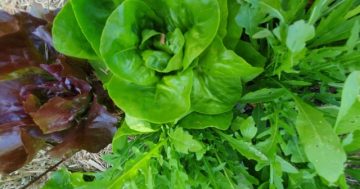
The warmer days and nights will see corn and tomatoes and other summer vegetables do well, if you have the water for them. Those lovely drought-tolerant leafy greens planted last month should continue to thrive.
Maintaining your planting schedule is important for your autumn and winter table. There are a few rather delicious vegetables that can be planted now as seedlings.
Kohlrabi is a family favourite at our house. Seedlings can usually be found in good nurseries and with specialist seed growers rather than in the garden section of the big hardware chain stores.
Kohlrabi is a relatively compact plant so can happily be grown in containers or the garden. It thrives in full sun, though it will tolerate some shade, (at least four hours of full sun each day). Before planting, gently fork in some compost, aged manure and organic complete fertiliser and add some lime/dolomite mix.
Stems are ready to harvest when you consider they are large enough to eat – generally when they are about the size of a tennis ball. Kohlrabi should be ready to harvest in about 55 to 70 days.
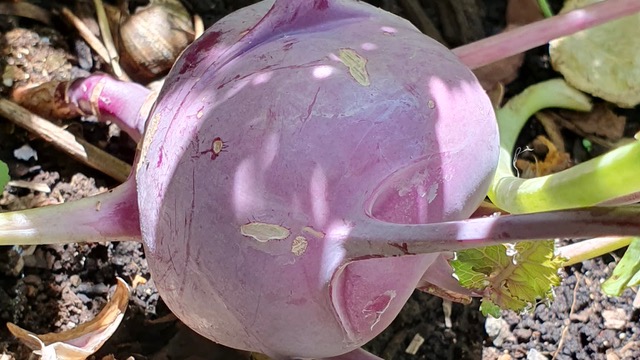
Photo: Wynlen House.
Swedes (short for Swedish turnips) are extremely hardy and suited to doing most of their growth development during the cool of autumn and the cold of winter. They are slow-growing, can be planted now as seeds, taking up to six months, and need a good moist soil as they develop. They have a sweeter flavour than turnips, with the Tasmanian butter swede, an Australian heritage variety, being the best variety for flavour.
It is not too late to plant a second crop of cucumber, pumpkin and squash seedlings. Zucchini, scaloppini, bush pumpkins, buttercup, potimarron and blue ballet are summer varieties that mature in 75 to 90 days unlike most of the pumpkin varieties which take more than 100 days. A second crop of sweet corn can go in now.
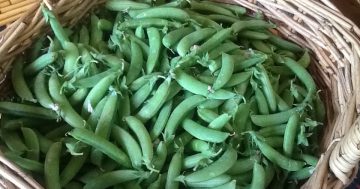
It is too late to propagate summer vegetables and a second crop will only be achieved by planting seedlings. However, beans, both climbing and bush varieties and peas of all types such as sugar snap, snow and shelling peas can be planted as seedlings or as seed directly in the garden.
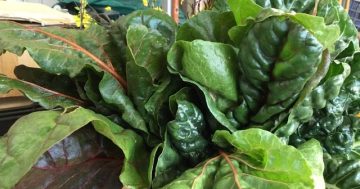
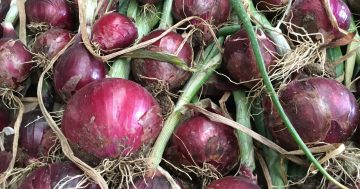
Other vegetables planted as seedlings now include anything from the Brassica family, especially the Asian greens. Other vegetables include beetroot, celery and celeriac, fennel – bulbing, lettuce, leeks, onions, spring onions, shallots, radicchio, chicories and silver beet. It is also not too late to get a second planting of potatoes in. These can be stored in situ and harvested through winter.
Turnip, both European and Asian, carrot and parsnip seeds can be sown directly in the garden for a late autumn, early winter harvest.
There are other vegetables that can be planted as seeds. Many of the vegetables listed above can be propagated now to be planted in late summer for autumn and winter eating. An interesting experiment for summer planting is using carrots as the basis for sprouting microgreens. Carrot microgreens taste surprisingly similar to carrot roots, but with a dill-like texture. Because carrot microgreens are just immature carrot plants, you don’t need a special type of seed.
Some companies may market their seeds for producing microgreens, but any quality organic carrot seed will do the trick. Use a shallow seed-raising tray and good quality seed-raising mix. Carrot seeds can be slow to germinate, taking up to three weeks, so be patient. Harvest when they have grown their first true leaves. Add another tray planted with anything from the brassica group such as kale, or radish and any legume such as sunflowers or peas. You will have a very tasty addition to any salad or wrap.
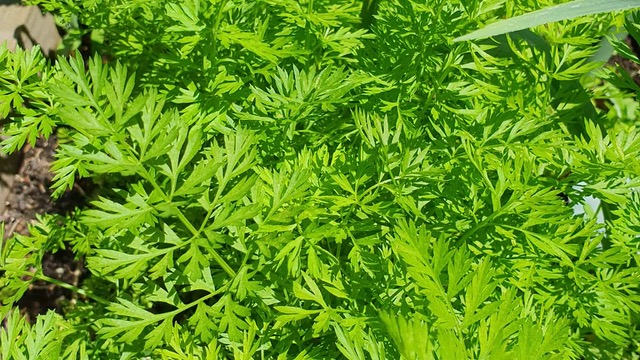
Add some liquid fertilisers to the mix. Photo: Wynlen House.
When life is tough for our vegetables and in dry weather, liquid fertilisers can be very useful. Also offering a little extra care by way of an additional application of organic, complete fertiliser, a bucket of compost per square metre and some lime/dolomite for a calcium and magnesium top-up is also helpful. (One third of a cup per square metre is enough to feed the soil while not really raising the soil pH.)
Compost and lime/dolomite are very important soil conditioners and improve soil aeration, drainage, and feed beneficial soil microbes as well as being essential for photosynthesis (magnesium).
Your plants will be very happy with little extras you give!