
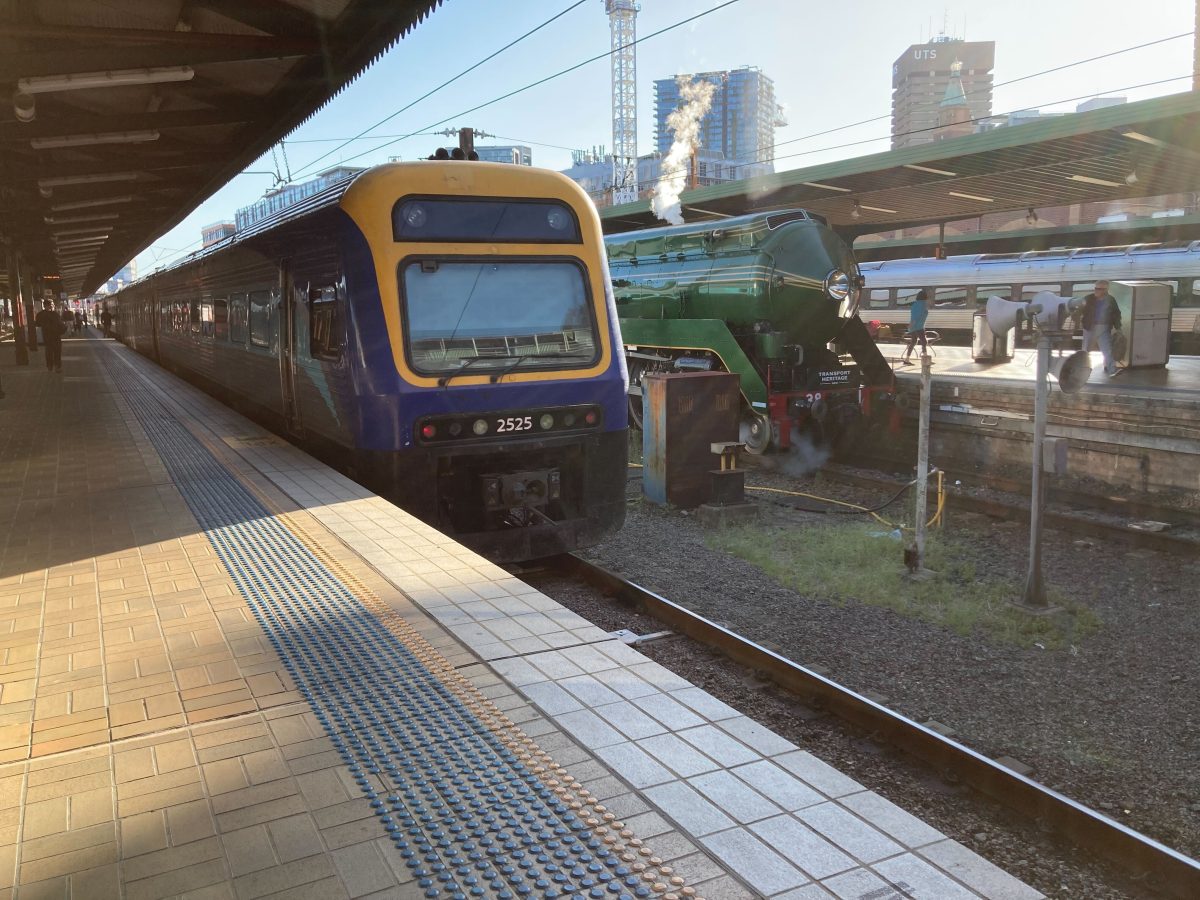
Time to join the 21st Century. The Southern XPLORER next to steam locomotive 3801 in Sydney. Photo: John Coleman.
The Property Council of Australia has backed ACT Senator David Pocock’s call for governments to get cracking on upgrades to the Canberra-Sydney rail line, saying the national capital should not fall further behind other major regions receiving substantial rail investment.
In a pre-Budget submission, Senator Pocock called on the Albanese Government to fund line upgrades that would materially reduce travel times between Canberra and Sydney.
Property Council ACT and Capital Region Executive Director Ashlee Berry said the slow journey times and the need to modernise the corridor were holding back the ACT’s economic potential and limiting sustainable transport choices.
“Senator Pocock is right – Canberra can’t wait any longer for serious investment in its only intercity rail link,” she said.
“A nationally significant corridor like Canberra–Sydney deserves a coordinated, three-level partnership approach that builds on the productive work already underway between the ACT and NSW governments.”
Ms Berry said upgrading the line would strengthen national productivity by better connecting Commonwealth agencies, businesses and workers with Sydney, Australia’s largest economic centre.
“As the home of Australia’s national institutions, Canberra should have infrastructure that reflects its role in the national economy,” she said.
ACT Chief Minister Andrew Barr said last November that cutting the Canberra-Sydney train trip down to three hours was achievable for “less than a billion dollars” – and would finally make it a genuine alternative to driving or flying. He said the ACT continued to push for improvements and was talking with the NSW Government, and was hopeful the Commonwealth would come to the party.
He had ruled out any discussion of high-speed rail, but said a few practical improvements could reduce journey time.
But with most of the line in NSW, it was up to that state and the Commonwealth.
This week, Mr Barr said that, as promised, a cross-border working group with the NSW Government had been established.
He said the focus of these discussions had been on making sensible improvements to the existing services and infrastructure, and that the conversations had been “very productive”.
“We look forward to saying more as these conversations progress,” Mr Barr said.
“We are actively working with the NSW Government on joint engagement with the Commonwealth, including joint funding opportunities.”

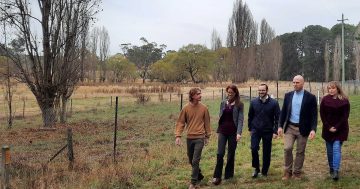
Senator David Pocock says reduced travel times will accelerate the growth of regional centres. Photo: Screenshot.
The ACT had also gone directly to the Commonwealth to confirm that Canberra-Sydney rail was a priority for the ACT, including to Infrastructure Minister Catherine King and Finance Minister and ACT Senator Katy Gallagher.
But the week before last, the Infrastructure Department told Senator Pocock at Estimates that the NSW Government had approached it, but not the ACT Government, about rail upgrades.
Ms Berry supported Senator Pocock’s call for a staged upgrade program, starting with straightening and modernising the existing corridor from Canberra to Goulburn and Yass, making it high-speed ready and setting the stage for future improvements to Sydney.
“This would be a sensible way to deliver early wins while preparing the corridor for future higher-speed operations,” she said.
A faster, more reliable Canberra-Sydney service would boost productivity, support housing growth and give people a real low-carbon alternative to driving or flying, Ms Berry said.
“The Commonwealth’s investment in Newcastle–Sydney high-speed rail shows what is possible,” she said.
“Extending that long-term ambition to the Canberra corridor would deliver similar benefits for another major region.”
Senator Pocock said in his submission that, using Fastrack Australia’s 2023 plan for upgrades, travel time could be reduced to as low as 90 minutes.
He said tracks could be upgraded to be high-speed ready, enabling the eventual transformation of the route into genuine high-speed rail.
“Reduced travel times across the Canberra Region will accelerate the growth of regional centres surrounding the ACT, like Yass and Goulburn, by increasing their felt proximity to the city, thereby making faster trains a key enabler of regional economic growth,” he said.
“Further, the Canberra-to-Sydney line is also well placed to be a key route establishing an early foundation for the longer-term development of a national high-speed rail network.”
Senator Pocock said very little progress had been made on meaningful upgrades, with the 4.5-hour travel time about the same as it was decades ago.
“There has been no major realignment, straightening, or electrification of the corridor. No higher-speed rolling stock has been introduced, and the line still mixes passenger services with freight, limiting speed and frequency,” he said.
“The $2.8 million investment under the Urban Precincts and Partnerships Program to make the Canberra Railway Station precinct housing-ready, while welcome, pales in comparison to the billions being spent to upgrade rail infrastructure in other jurisdictions.”